

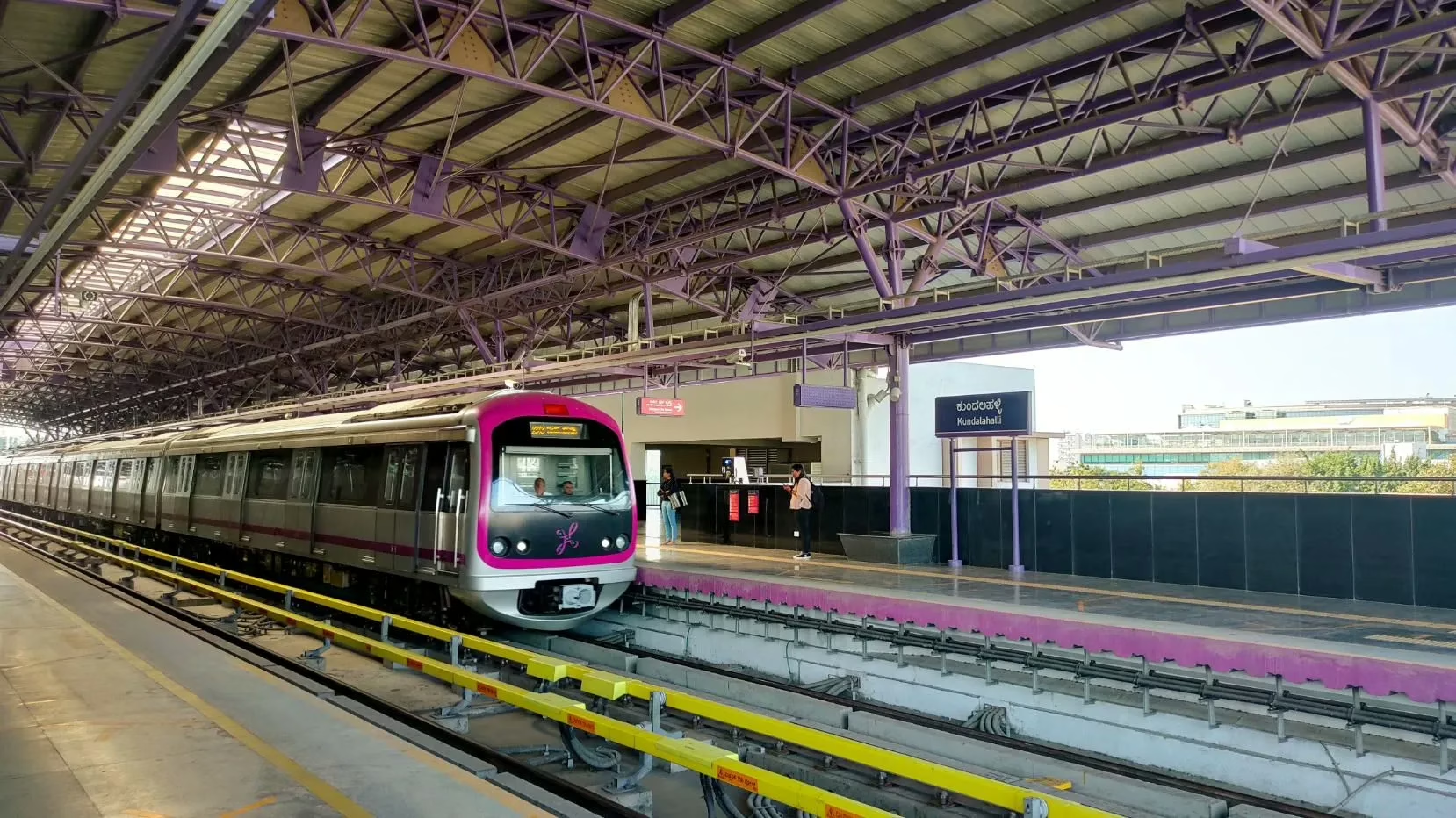
Bengaluru’s Namma Metro is reshaping the city’s real estate landscape. Once viewed mainly as a solution for traffic congestion, the metro network has now emerged as a key factor influencing property values, rental demand, and commercial growth. With every new corridor added, property prices near metro stations are rising steadily, creating strong demand across both residential and commercial sectors.
Property Values Near Metro Corridors
Across Bengaluru, property prices in neighbourhoods located along operational metro routes have seen an estimated rise of 15–20%. This increase is most notable in micro-markets such as Whitefield, Kanakapura Road, and Yeshwanthpur, where sharper appreciation has been recorded.
Industry reports suggest that these regions benefit from two key factors — location and linkage. As soon as a metro corridor becomes fully operational, property values in adjoining areas tend to stabilise at a higher benchmark, creating long-term value for the region.
Rental Demand Near Metro Stations
The rental housing market near metro-connected zones has also shown consistent growth. Rental values are estimated to be 8–10% higher in properties located near metro access points compared to those without such connectivity. Smaller flats in these well-linked neighbourhoods are being absorbed quickly, largely due to reduced travel times and convenience for working professionals.
Tenants are increasingly willing to pay a premium for properties with metro accessibility, even when rental rates are slightly higher. Neighbourhoods such as KR Puram, Hebbal, and Electronics City have emerged as key rental markets, recording stronger yields as connectivity continues to expand.
Commercial and Retail Boost
The metro network has significantly boosted the demand for Grade-A office spaces, retail hubs, and commercial corridors across Bengaluru. Rental gains in premium office clusters located within 500 meters of metro stations are estimated to be in the range of 18–25%.
Businesses and companies are drawn to metro-connected hubs because of the accessibility they provide to employees and customers. Similarly, retail markets in areas like Whitefield, Outer Ring Road, and the Central Business District (CBD) are witnessing steady demand growth, driven by improved connectivity and footfall.
Lessons from Tier-2 Cities
The impact of metro infrastructure on real estate is not limited to Bengaluru alone. Cities such as Nagpur, Lucknow, and Pune have reported similar trends, where metro corridors have reshaped residential and commercial markets.
In these cities, residential projects located near metro lines are showing higher absorption rates, while rental housing markets in metro-connected areas continue to grow steadily. Commercial properties within close proximity to operational stations are also commanding higher values, reinforcing the consistent influence of metro connectivity on real estate.
The Road Ahead for Bengaluru
The expansion of Namma Metro is poised to further shape Bengaluru’s real estate landscape in the coming years. Upcoming stretches towards the airport, Hebbal, KR Puram, and Electronics City are expected to unlock additional investment opportunities across residential, rental, and commercial segments.
Real estate linked to metro expansion is likely to benefit in multiple ways. Homebuyers may find greater stability in property values and better absorption rates in metro-linked corridors. Investors could see stronger long-term appreciation driven by infrastructure upgrades. Businesses and retailers may also benefit from reduced commute times, improved accessibility, and higher operational efficiency.
With several metro corridors scheduled to be completed in phases up to 2027, the story of Namma Metro and its influence on Bengaluru’s property market is still unfolding. Each new line is expected to bring growth and value creation across residential, rental, and commercial sectors, reinforcing the strong link between infrastructure development and real estate.
Prominent Property Hotspots Near Metro Corridors
Based on current trends, several Bengaluru localities have emerged as key real estate hotspots driven by metro connectivity. The Whitefield Metro Corridor continues to see strong demand for apartments and commercial hubs, while Kanakapura Road Metro Line has recorded steady appreciation in plotted developments and mid-segment housing. Around Yeshwanthpur Metro Station, mixed-use projects and rental housing are gaining popularity, and KR Puram is witnessing rising interest with the upcoming metro stretch improving access to the Outer Ring Road and major IT parks. Similarly, Hebbal has become a preferred choice for both residential and office markets owing to metro expansion, while Electronics City remains an active IT corridor with increasing demand from tenants and companies.
The steady expansion of Namma Metro has made a measurable impact on property prices, rentals, and commercial spaces across Bengaluru. From residential absorption to office market growth, metro corridors continue to drive real estate demand. As upcoming stretches become operational, the city is expected to witness further momentum in property values tied closely to metro connectivity.
Also Read: Top 10 New Launch Apartments Near Metro Stations in Bangalore 2025