


Bengaluru has initiated a pilot project to address rising urban temperatures, marking a significant step toward climate-responsive urban planning. The initiative, led by the Greater Bengaluru Authority (GBA), focuses on identifying and mitigating urban heat islands (UHIs)—areas within cities that experience higher temperatures due to dense construction and reduced green cover.
This development reflects a broader shift in urban governance, where climate resilience and sustainability are becoming central to city planning and real estate development.
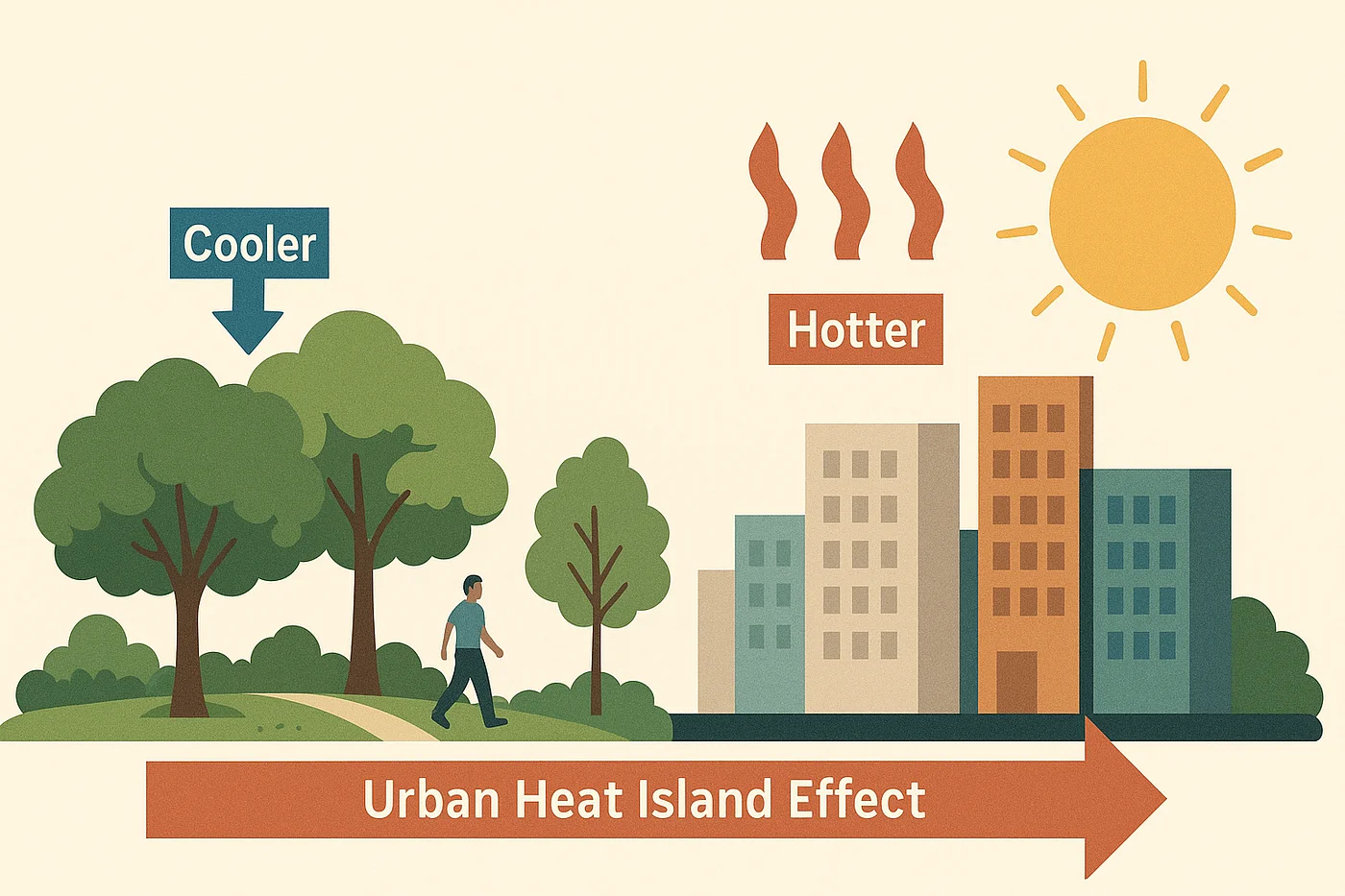
Understanding the Urban Heat Island Effect
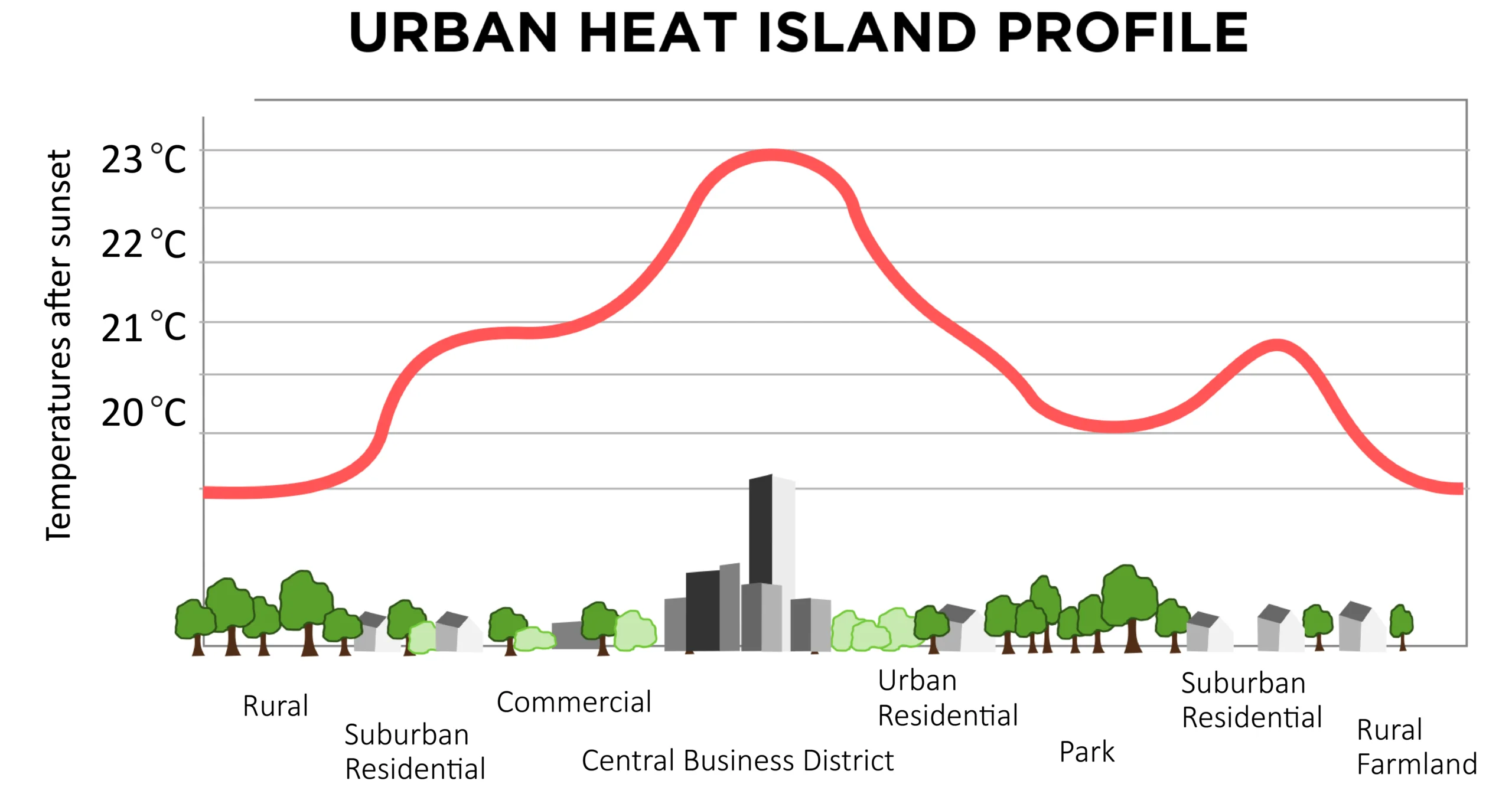
Urban heat islands occur when natural landscapes are replaced with concrete, asphalt, and dense infrastructure, leading to higher heat absorption and reduced cooling.
In Bengaluru, rapid urbanisation has significantly altered land use patterns. Over the years:
- Built-up areas have increased sharply
- Vegetation cover has declined
- Water bodies have reduced
Studies indicate that built-up areas in Bengaluru have increased by over 1000% in recent decades, while vegetation cover has dropped significantly, contributing to rising temperatures.
Additionally, certain localities such as Hennur Bande have recorded surface temperatures of around 37°C during peak summer months, highlighting the severity of the issue.
Key Features of the GBA Heat Mitigation Project
The pilot project is part of Bengaluru’s broader climate action strategy and focuses on data-driven identification and targeted intervention.
Key Components of the Initiative:
- Identification of heat hotspots such as Peenya Industrial Area and Hennur Bande
- Development of climate-responsive urban parks
- Expansion of green cover through tree planting
- Introduction of cool roofs and reflective surfaces
- Creation of shaded public spaces and water points
The project also includes ward-level climate mapping, where authorities assess heat vulnerability at a micro level, considering factors such as building density, lack of shade, and limited airflow.
A budget allocation of approximately ₹20 crore has been made for the redevelopment of identified zones, including the transformation of underutilized land into green spaces.
Infrastructure and Climate Planning Integration
The initiative is aligned with Bengaluru’s Climate Action and Resilience Plan (BCAP), which focuses on improving sustainability, reducing emissions, and enhancing urban livability.
The plan emphasizes:
- Increasing tree canopy cover
- Promoting nature-based solutions
- Enhancing public green spaces
- Improving climate resilience
Bengaluru is part of the global C40 Cities network, which supports cities in implementing climate action strategies and adapting to environmental challenges.
Impact on Real Estate Market
The introduction of climate-focused urban planning is expected to influence Bengaluru’s real estate sector in several ways.
1. Rising Demand for Green and Sustainable Housing
Developers are increasingly incorporating features such as:
- Green building certifications
- Energy-efficient designs
- Landscaped open spaces
- Water management systems
Properties with such features are likely to see higher demand and premium pricing in the long term.
2. Increased Value of Green Micro-Markets
Areas with better green cover, parks, and lower heat exposure may experience:
- Higher property appreciation
- Improved rental demand
- Better livability index
Conversely, dense urban zones with limited green space may face pricing pressure or slower growth.
3. Shift Toward Climate-Resilient Developments
The real estate sector is gradually aligning with climate policies, leading to:
- Adoption of sustainable construction materials
- Increased focus on ventilation and design
- Integration of green infrastructure in projects
4. Influence on Commercial Real Estate
Heat mitigation strategies also impact commercial spaces:
- Improved employee comfort in office zones
- Increased demand for green-certified office buildings
- Enhanced long-term asset value
Pricing Trends in Bengaluru
Average Residential Price per Sq Ft
| Zone | Price Range (₹/sq ft) |
|---|---|
| Central Bengaluru | ₹20,000 – ₹35,000+ |
| East (Whitefield) | ₹8,000 – ₹15,000 |
| North (Airport) | ₹6,000 – ₹12,000 |
| South Bengaluru | ₹5,500 – ₹10,000 |
Premium projects with sustainability features often command higher pricing and faster absorption rates.
Comparison with Other Karnataka Cities
While Bengaluru leads in climate-focused urban initiatives, other cities in Karnataka show varying real estate trends.
| City | Avg Price (₹/sq ft) | Growth Drivers |
|---|---|---|
| Bengaluru | ₹6,000 – ₹35,000+ | IT, infrastructure |
| Mysuru | ₹8,000 – ₹10,000 | Tourism, education |
| Mangaluru | ₹6,000 – ₹9,000 | Port, IT |
| Hubballi-Dharwad | ₹4,000 – ₹6,000 | Logistics |
| Belagavi | ₹4,500 – ₹7,000 | Industrial |
These cities are gradually adopting sustainable urban planning practices, though at a slower pace compared to Bengaluru.
Five-Year Outlook (2026–2031)
Climate-resilient urban planning is expected to play a larger role in real estate development.
Key Projections
| Factor | Outlook |
|---|---|
| Price Growth | 5%–8% annually |
| Demand for Green Housing | Increasing |
| Infrastructure Impact | High |
| Climate Regulations | Strengthening |
Areas with improved green infrastructure and climate adaptation measures are expected to see stronger long-term appreciation.
Broader Urban and Economic Impact
The heat mitigation initiative highlights a shift toward sustainable urban development models.
Key Impacts:
- Improved urban livability
- Reduced health risks for outdoor workers
- Enhanced public infrastructure
- Increased investment in green projects
The initiative also includes the creation of cooling centers and shaded public facilities to support vulnerable populations during extreme heat conditions.
Regional Highlights
- Bengaluru is addressing urban heat through structured climate planning
- Green infrastructure is becoming a key factor in real estate demand
- Sustainable housing is gaining importance
- Infrastructure and climate policies are increasingly interconnected
- Tier-2 cities may follow similar models in the future
Summary
Bengaluru’s urban heat mitigation project marks an important step toward integrating climate resilience into urban planning and real estate development. By focusing on green infrastructure, sustainable design, and data-driven planning, the city is adapting to the challenges posed by rapid urbanisation.
Over the coming years, such initiatives are expected to influence property demand, pricing trends, and development patterns, reinforcing the importance of sustainability in India’s real estate sector.
Also Read: Sobha New Launch Projects in Bangalore 2026: Market Overview