

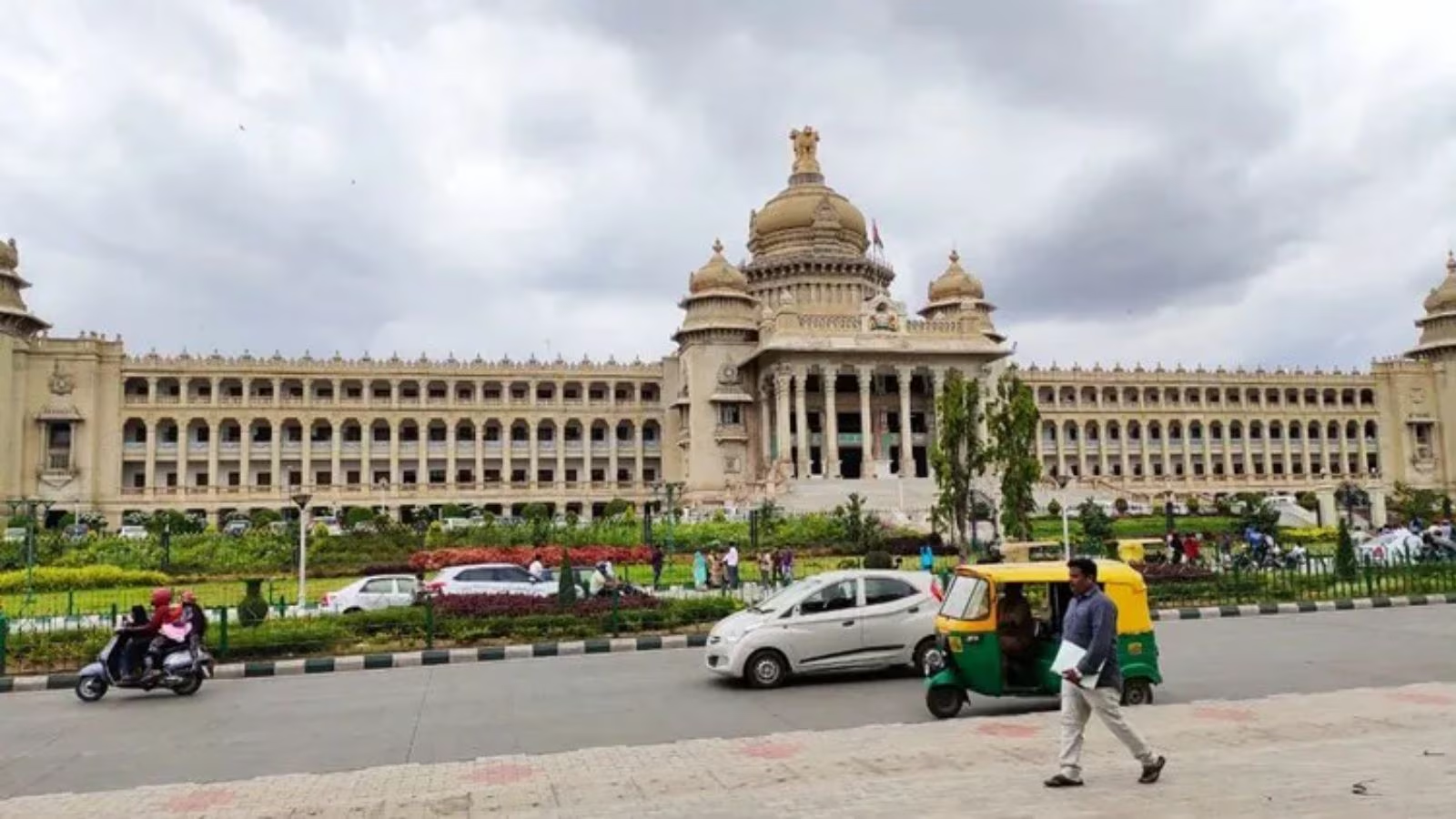
As of September 2, 2025, Bengaluru has shifted to a new governance structure under the Greater Bengaluru Governance Act, 2024. The previous Bruhat Bengaluru Mahanagara Palike (BBMP) system has been replaced by a three-tier model to streamline city planning, development, and service delivery across the region.
Introducing the New Three-Tier Structure
The new model consists of the Greater Bengaluru Authority (GBA) at the top tier, which includes the Chief Minister, several state ministers, Members of Parliament, Members of the Legislative Assembly and Council from Bengaluru, and the mayors of the five newly formed City Corporations. The GBA is tasked with harmonising planning and execution across all public agencies and departments in the region.
Beneath the GBA are the five City Corporations—East, West, Central, North, and South—each with its own mayor, council, and administrative commissioner. These corporations will have smaller wards (the exact boundaries to be finalised post-delimitation), and each corporation will enjoy substantial autonomy, particularly regarding financial matters, taxation, and local elections.
At the grassroots is the system of Ward Committees, designed to enhance participation at the local neighbourhood level. Each ward committee is headed by an elected councillor and includes citizens, with membership expanded to 14 from the earlier 10, and partly chosen by lottery to enable broader citizen representation.
Changes in Administrative Oversight and Accountability
One of the most significant shifts under the Act is bringing all major public service agencies—such as BESCOM, BWSSB, BMTC, and BMRCL—under the aegis of the GBA. This marks a departure from the previous fragmented model, and places state-level coordination at the core of administering critical city utilities and infrastructure.
Wards, which had been very large under BBMP, are now being made smaller, with more divisions tied to assembly constituency boundaries. This change is expected to improve local accountability by bringing governance closer to residents. The replacement of zonal commissioners with corporation commissioners is intended to clarify responsibility lines for public services like roads, parks, hospitals, and water supply.
Citizen Participation: Change in Ward Committees
Ward committees under GBA are structured to be more inclusive. Out of the 14 members per committee, seven will be selected through random draw among registered voters, rather than fully nominated by councillors. This is intended to address past concerns about committees being filled with nominees lacking active contribution. The expansion in number of wards will also lead to more committees overall, thereby enabling greater resident engagement across the city.
What These Reforms Mean for Bengaluru
Under the Greater Bengaluru Governance Act, the city’s governance is becoming more layered, with clearer administrative roles and boards for civic participation. With the GBA overseeing planning and delivery across multiple agencies, the effort is to ensure that services like water, transport, waste management, and infrastructure work in sync rather than in silos.
Smaller wards, corporation-level mayors, and empowered ward committees could make service delivery more responsive and accountable. For residents, the changes reflect a shift toward governance that emphasises local representation, financial autonomy for city bodies, and coordination across departments that were earlier managed separately.
Implementation and Ongoing Challenges
Though the Act has been enacted, full implementation will require detailed delimitation of wards, the establishment of new ward committees, and clear demarcation of the functions and powers of the new City Corporations. Legal challenges have also been raised over state control embedded in the GBA structure.
Additionally, operationalizing coordination across powerful parastatal agencies tied to different levels of government, and ensuring that smaller administrative units have the resources and capacity to deliver civic services, remain substantial tasks.
Conclusion
The Greater Bengaluru Governance Act, 2024, represents a major reform of Bengaluru’s municipal structure. Replacing BBMP with a three-tier model inclusive of the GBA, five City Corporations, and expanded Ward Committees is expected to reshape how governance works in the city. With increased citizen participation and clearer institutional roles, the groundwork is laid for more coordinated planning and service delivery. Actual outcomes will depend on implementation, resource allocation, and how quickly administrative changes are put into action.
Also Read: New Governance Model – Greater Bengaluru Authority | Offices, Timeline & Impact


