

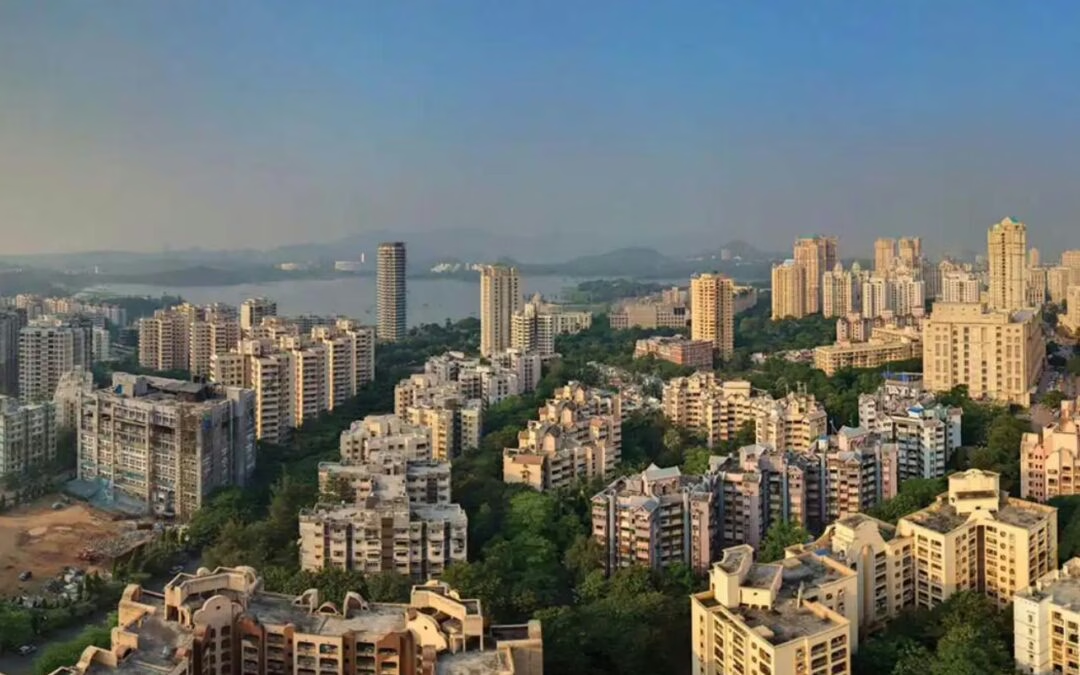
Property tax is a key revenue source for municipal bodies in India, and in FY 2024-25, several cities recorded historic collections. The variations in tax rates, enforcement, real estate growth, and administrative efficiency have led to a significant divergence in revenue across metros. According to a recent Trade Brains report, Mumbai, Bengaluru, Hyderabad, Delhi, Chennai, and Ahmedabad featured among the top cities in property tax collections during this period.
Mumbai Tops with ₹6,198 Crore Collection
Topping the list is Mumbai, where the Brihanmumbai Municipal Corporation (BMC) collected around ₹6,198 crore in property tax for 2024-25. This landmark number is attributed to the city’s high property valuations, strong enforcement mechanisms, and efficient tax administration. Municipal records show that property tax rates in Mumbai vary from 0.316% to 2.296% of assessed capital value, depending on property class and zone.
Higher rates are applicable in luxury zones and premium wards, pushing larger parcels and commercial properties into higher brackets. For most residential properties, rates typically range between 0.2% and 1.5%, though high-end or well-located properties exceed this range.
Bengaluru Posts Strong Growth: ₹4,930 Crore Collected
In Bengaluru, the Bruhat Bengaluru Mahanagara Palike (BBMP) collected approximately ₹4,930 crore in property tax in FY 2024-25. This growth is linked to improved digitalization, stricter enforcement, and auctions of defaulter properties. Bengaluru’s property tax operates under the Unit Area Value (UAV) method, where rates range from 0.5% to 1% of the property’s annual value.
The success in collection underscores the city’s capacity to tap its rapidly expanding real estate market. As Bengaluru has grown outward, multiple peripheral areas have seen fresh development, increasing the tax base.
Hyderabad, Delhi, Chennai, Ahmedabad in the Mix
Hyderabad also made substantial gains, with the Greater Hyderabad Municipal Corporation (GHMC) collecting over ₹2,038 crore in property taxes. The city follows a slab-based structure, with residential property taxes ranging from ₹0.50 to ₹3 per square foot depending on classification and usage.
In Delhi, property tax rates vary from 0.5% to 3% of a property’s annual value depending on zoning, age, and utility. The Municipal Corporation of Delhi (MCD) collected approximately ₹2,024 crore in the same fiscal period.
Chennai also crossed the ₹2,000 crore mark in tax receipts for the first time, driven by enhanced assessment and collection mechanisms. Tax rates in Chennai typically span from 0.2% to 1.5%, factoring in location, age, and built-up area.
Ahmedabad stood out with collections exceeding ₹1,739 crore, attributed to digitization efforts, stricter compliance, and annual growth in new housing stock. The city’s municipal body also maintained one of the highest effective rates, supported by a robust paying base.
What Drives Higher Property Tax Collections?
Several factors influence how much property tax a city can collect:
-
Property Value and Zoning: Cities with high land values and premium zones naturally yield greater revenues.
-
Tax Rate Structure: Progressive or higher slab-based rates in commercial or luxury zones increase revenue per unit area.
-
Administrative Efficiency: Digitization, enforcement, and defaulter tracking are pivotal in actualizing collections.
-
Real Estate Growth: Expansion of new housing, redevelopment, and conversion of land increase the taxable base.
-
Municipal Initiatives: Auctioning of defaulter properties, special drives, and public compliance campaigns raise collections.
Cities that combine strong real estate markets with effective municipal governance tend to lead in property tax revenue.
Implications for Homeowners and Investors
High property tax collections reflect both the value of real estate in those cities and the municipalities’ ability to enforce tax norms. For homeowners, it signals the cost of ownership—especially in premium zones. Investors, meanwhile, may view higher tax environments as a trade-off against better services and infrastructure, which is what these revenues often fund.
As cities scale infrastructure needs and public services, the trend of rising property tax collections is likely to accelerate. But how well municipal bodies balance rate policy, compliance enforcement, and service delivery will determine how sustainable these revenues remain.
FY 2024-25 has marked a milestone in municipal finances, with cities like Mumbai, Bengaluru, Hyderabad, Chennai, Delhi, and Ahmedabad recording record property tax collections. These figures not only reflect the growth in real estate valuation but also underscore the importance of governance frameworks, compliance, and revenue systems in urban India. As ownership costs and city services become more intertwined, property tax trends will continue to offer a lens into how Indian cities balance growth and civic sustainability.
Also Read: Real Estate Investment and Tax Benefits in India: A Detailed Overview


