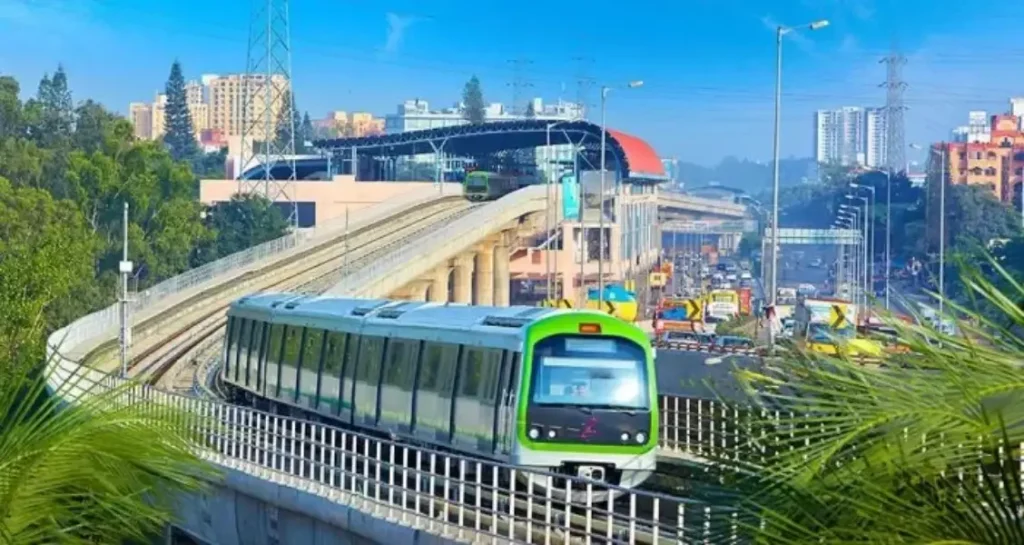
The Bangalore Metro Rail Corporation Limited (BMRCL) has initiated plans to commercially develop land around metro stations as part of its strategy to increase non-fare revenue and reduce reliance on ticket collections. As part of this effort, BMRCL has floated a Request for Proposal (RFP) to appoint a Transaction Advisor for the development of land parcels near the Swami Vivekananda Road (S.V. Road) Metro Station in east Bengaluru.
This initiative is part of BMRCL’s Transit-Oriented Development (TOD) framework, which integrates transportation infrastructure with commercial and business activity. Under this model, land around metro stations is planned for office spaces, retail hubs, parking facilities, and mixed-use buildings, helping generate long-term revenue to support metro operations.
According to the RFP, the S.V. Road development site covers 8,063 square metres and has a permissible Floor Area Ratio (FAR) of four, allowing a built-up area exceeding 32,000 square metres. The project also includes an additional vacant land parcel measuring 3,225.73 square metres. The selected Transaction Advisor will carry out feasibility studies, market assessments, project structuring, and financial modelling before inviting private developers under a Public-Private Partnership (PPP) structure.
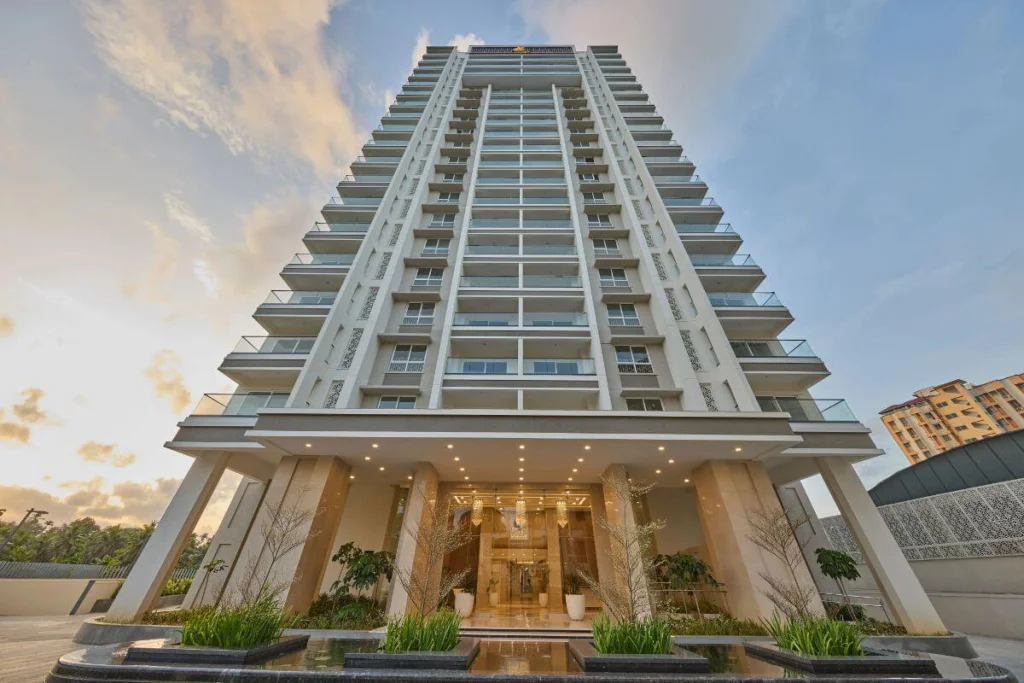
The proposed project includes two towers, one with 18 floors and another with nine floors, along with multiple basement levels for parking and service infrastructure. The advisor will also manage the bidding process and facilitate the signing of the concession agreement with the selected private developer.
BMRCL has previously undertaken similar property monetisation initiatives at other metro locations. A long-term lease agreement was signed for land near Nagasandra Metro Station, and similar development opportunities are being planned around the Majestic interchange, Nagawara Metro Station on the Pink Line, and K.R. Pura. These locations connect several key growth corridors, including areas such as Whitefield, which has seen increasing commercial and residential activity driven by metro connectivity.
Large-scale transit infrastructure projects typically influence surrounding real estate development by improving accessibility and supporting higher-density land use. This trend is also visible along major urban corridors such as Electronic City, which continues to attract development due to improved transport and employment linkages.
With Bengaluru’s metro network expanding, BMRCL’s land development strategy aims to enhance financial sustainability while supporting structured urban growth around key transit nodes.
Also Read: Bengaluru Airport Metro Line to Become Operational by End of 2027: BMRCL