
Why this comparison matters now
Bangalore has grown up fast, and so have our housing choices. Between high-rises and independent villas sits a sweet middle—row houses and townhouses. On a site visit they can look almost the same, which is exactly why many buyers mix them up and later feel, hmm… this isn’t what I imagined. This guide keeps things simple and human. It focuses on Bangalore realities but stays useful for buyers anywhere in India.
First, what’s what in plain words
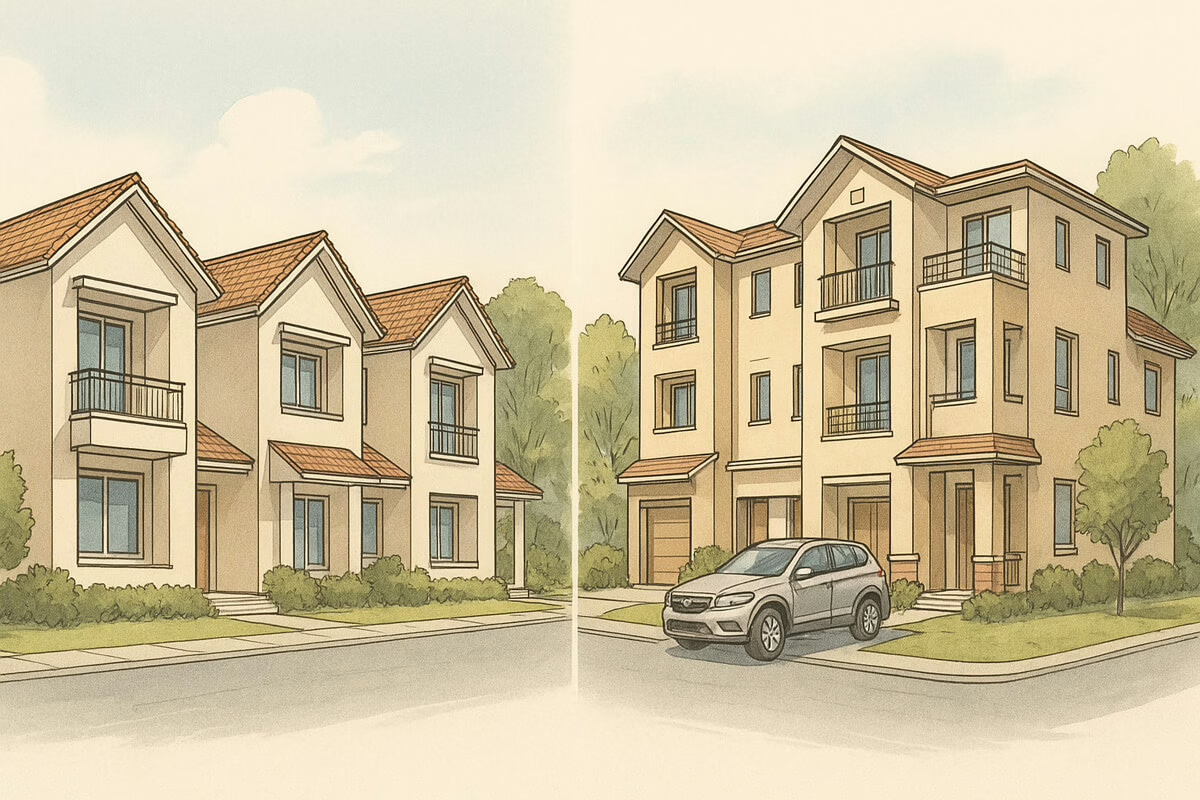
Row house: A row house is a single home that shares side walls with neighbors in a neat row. No one lives above you or below you. Think of it as a slim, vertical villa tucked into a well-planned street.
Townhouse: A townhouse is also an attached home, but the building can host more than one dwelling stacked as duplexes (a lower unit and an upper unit). You may have a neighbor upstairs or downstairs and usually a small shared lobby or lift.
On paper the difference sounds tiny. In day-to-day living, it’s not tiny at all.
Architecture and planning: how space actually feels
Row houses generally run G+1 or G+2, with your own front door opening to the internal road. You walk straight into your staircase, your rooms, your terrace. Windows are usually at the front and back because side walls are shared, so good designers compensate with wider frontages or lightwells.
Townhouses often arrive as duplexes in a low-rise block (G+2 or G+3). Lower duplex gets a small garden sit-out; upper duplex trades that for a larger terrace. There’s usually a common stair or a lift. This tiny shared core is what subtly changes the vibe—you’ll probably meet your downstairs/upstairs neighbor more than you planned, which some people love, some don’t.
Designers also use townhouses for more playful layouts—double-height living, tucked study nooks, bigger terraces. Row houses lean towards classic zoning: living on ground, bedrooms above, maybe a family lounge under the roof. Neither is inherently better; it’s your lifestyle that decides.
Land and legal structure: the part buyers discover late
This is the bit that trips people up. With row houses, you typically own a clearly defined parcel of land (or at least a higher undivided share tied to your footprint). It feels like a mini-plot, and future appreciation tends to ride on that land value. You also carry more say—and more responsibility—over your structure.
Townhouses are usually sold like apartments: you own the built area plus an undivided share of the project land. The roof, external elevation, lift, foundations—these are shared. For someone who hates dealing with exterior maintenance, that’s a relief. For someone who wants absolute autonomy (change the gate, add solar racks, tweak the facade within by-laws), it can feel limiting. Neither is wrong, just know it upfront.
Costs most people forget to budget
Monthly maintenance in both formats goes toward security, landscaping, clubhouse, common utilities. In townhouses, add the lift AMC and any block-level works. In row houses, there’s less shared machinery, but when the exterior needs repainting or the roof needs a fix, the buck stops with you (even if the association coordinates cycles for uniformity).
Utilities behave a bit different too. A row house may have individual sump/overhead tanks or dedicated lines; a townhouse block leans on shared infrastructure. Over a decade, these micro-differences show up not only in money but also in peace of mind. Some people want to pick vendors and get things done tomorrow morning—row house suits that personality. Others prefer to raise a ticket with facility management and be done—townhouse wins there.
Resale and appreciation in Bangalore’s market
In Bengaluru, land is the magic ingredient. Because row houses are tied more directly to land, they often see stronger appreciation, especially once a location matures (new metro, better arterial roads, retail spine nearby). Also, supply is tight; builders release far fewer rows than apartments, which keeps scarcity on your side.
Townhouses, positioned as premium duplex living, resell well too, especially in branded townships with stable associations. But they appeal to a slightly narrower buyer pool who understands the product. If you’re trying to maximize resale breadth, row house has a small edge. If you’re optimizing for “luxury duplex feel under a tighter budget than a villa,” townhouse makes a lot of sense.
Lifestyle and privacy: the invisible everyday
Noise travels vertically more than horizontally. In a row house, you share only side walls, so no footsteps from above, no speaker bass from below. In a townhouse duplex, that can happen, even if good construction reduces it. If you have a musician at home or toddlers who drop toys like meteors, keep this in mind.
Outdoor life also differs. Garden lovers usually prefer row houses or lower duplex townhouses (easy to step out barefoot with coffee). View-seekers and evening hosts often fall for upper duplex townhouses with generous terraces; sunsets up there do half the selling. Pet owners notice the convenience gap fast—door to street from a row house is instant, an upper duplex adds the lift ride. Tiny thing, big daily effect.
Customization is another everyday theme. Want a pergola in your garden, a larger utility counter, or to future-proof for a home elevator? Row houses typically offer clearer pathways (subject to community by-laws). Townhouse exteriors are part of the shared shell—internal changes are fine, external are regulated tighter. This can be great (uniform streetscape ages well) or frustrating (less personal flair).
Pricing reality in Bangalore (and the mindset check)
Across the city, both formats sit above mass-market apartments and below full villas. Row houses usually cost more in total because they are larger and tied to land, but townhouse per-square-foot can be similar thanks to design finish and amenity parity. If you’re comparing, don’t fixate only on headline price. Ask:
-
How much exclusive open space do I get (garden vs terrace)?
-
What’s the share of land and what rights come with it?
-
What are 5-year and 10-year maintenance realities for this format?
-
What’s the likely buyer persona when I exit?
A quick mindset test helps: if you love control and the “my house, my rules” feeling (within guidelines), row house fits. If you prefer convenience and shared responsibility with luxury duplex volume, townhouse fits. Money matters, but so does temperament.
A Bangalore example: Tata Varnam, North Bengaluru
Tata Varnam is useful to discuss because it offers both formats inside one integrated development. The townhouses come as duplexes—lower ones with private lawns, upper ones with generous terraces. The row houses are exclusive single homes in a row, no one above or below, with their own small garden and direct street-style entry. Same master planned community, two different living stories.
Walking through such a project is eye-opening. You literally feel the difference in your feet: row house steps feel like home to street in seconds; townhouse upper units feel like a penthouse without a tower. The clubhouse, parks, and security are shared, so quality of life is consistently premium either way. What changes is day-to-day rhythm—how you come and go, how often you meet that one neighbor in the lift lobby, how you use your outdoor space, how you solve maintenance.
If you’re visiting, do this small experiment: stand in a row house living room at 10 a.m., listen for external noise, trace the path to your garden. Then climb into an upper duplex townhouse, step out onto the terrace, and imagine a late-evening chai under the sky. Your gut will tell you which picture belongs to your family.
Overlooked details buyers regret later
-
Entry choreography: Private gate vs shared foyer seems tiny at booking stage, but daily muscle memory is powerful. If you need step-out speed (pets, elderly parents), rows have an edge.
-
Vertical neighbor reality: Even the best slabs transmit some sound. If quiet is sacred at home, rows feel calmer.
-
Elevator dependence: Upper townhouses rely on a block lift. It’s fine 99% of the time—but plan for that 1%. Lower townhouses and row houses feel simpler here.
-
Exterior agency: Repainting, waterproofing, adding solar, changing a gate—ask who decides, who pays, how often and how much. People don’t ask, later they wish they had.
-
Exit story: Picture the buyer who will love your home five years out. Are there enough of them at your likely price? In many micro-markets, the answer is yes for both formats, but the row house funnel is wider.
A short, honest pros-and-cons snapshot
Row house—why people love it: Land tie-in, no upstairs neighbor, stronger autonomy, classic “home on a street” vibe inside a secure gated layout.
Row house—what can annoy: You’ll own more of the maintenance decisions and costs; side windows are fewer; total ticket size is usually higher.
Townhouse—why people love it: Duplex drama without a tower, big terrace or private lawn, slightly lower entry price vs rows in the same community, structure maintained via HOA.
Townhouse—what can annoy: One vertical neighbor, shared lobby or lift, stricter exterior rules. Some folks will still ask, “Is it an apartment or a villa?” and it’s both, kind of.
How to choose in 30 minutes on a site visit
-
Sound test: Stand silent for two minutes in each format, different times of day if possible. Your ears decide better than brochures.
-
Route test: Simulate three routines—pet walk, grocery carry-in, and elder movement. Which one feels smoother?
-
Light test: Track natural light across living, kitchen, and bedrooms. Some rows get gorgeous morning light, some townhouses glow in evenings on terraces.
-
Governance test: Meet the facility team or sales head and ask blunt questions on maintenance cycles, sinking funds, exterior guidelines. Note answers, not promises.
-
Exit test: Ask a local broker what resells quicker in that micro-market—rows or duplexes—and why. Markets do have personalities.
Final word
There isn’t a universal winner here. A row house feels like freedom stitched to a community spine; a townhouse feels like a modern duplex with less personal admin. If your heart wants a small garden, your ears want quiet, and your head wants land, choose the row house. If your heart wants skyline dinners, your legs don’t mind one lift ride, and your wallet prefers saving that extra chunk, choose the townhouse. Either way, you’re stepping into a calmer, roomier life than a typical high-rise.
And yes, no home is perfect, a little squeak in the stair or a scuff on the garden gate will show up. But if the format fits your routines, those tiny flaws turn into the warm texture of everyday living, not regrets. Pick with your head, confirm with your feet, and then, finally, say yes with your gut. It’s your story, your home; it should feel like you—slightly imperfect, but just right.