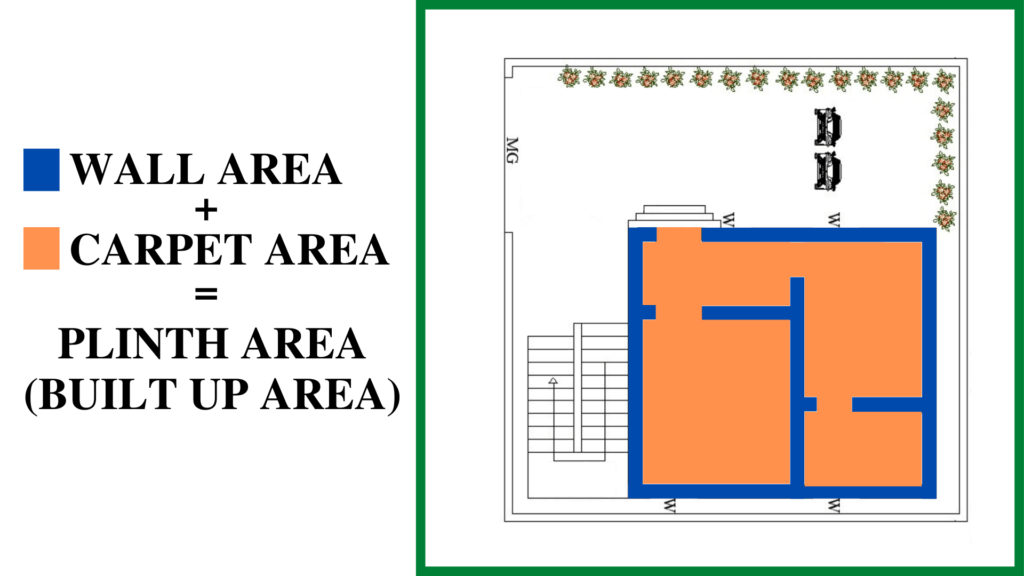
When navigating the complexities of the real estate market, homeowners and investors often encounter a variety of technical terms that define property size. Whether you are browsing apartments for sale or luxury villas, Plinth Area is a fundamental metric used by architects, builders, and local authorities to determine the physical footprint of a structure.
Understanding the plinth area is not just a matter of technical knowledge; it directly impacts property valuation, taxation, and the actual living space available to an occupant. This guide provides a detailed breakdown of what plinth area entails, how it is calculated, and its relationship with other critical measurements like carpet area and built-up area.
What is Plinth Area?
The Plinth Area refers to the total covered built-up area of a building measured at the floor level of any story. In simpler terms, it represents the entire area occupied by the building structure within its external walls.
Unlike “Carpet Area,” which only accounts for the space where you can physically spread a carpet, the plinth area includes the structural components that make the building stable and functional. It serves as the primary basis for estimating construction costs and is a key figure in municipal records for building approvals, especially in high-growth zones like North Bangalore and Whitefield.
Components Included in Plinth Area
To calculate an accurate plinth area, several structural elements are accounted for:
-
Internal and External Walls: The thickness of all walls is included.
-
Columns and Pillars: Structural supports often seen in large-scale projects.
-
Staircases: Internal staircases and lift shafts.
-
Internal Corridors: Passages and hallways within the building.
-
Sanitary Shafts: Small internal shafts (typically < 2 sq. meters) are often not deducted.
-
Covered Balconies: If protected by a roof and part of the permanent structure.
Components Excluded from Plinth Area
Certain areas are strictly excluded to maintain the “covered” definition:
-
Open Terraces: Uncovered spaces on the top floor.
-
Courtyards: Open-to-sky internal spaces.
-
External Staircases: Ramps or stairs located outside the main building envelope.
-
Cantilevered Projections: Architectural features like sunshades that do not have floor-level utility.
How to Calculate Plinth Area
Calculating the plinth area is a vital step in property assessment. While professional surveyors use precise tools, the basic formula is straightforward:
Alternatively, it can be measured by taking the external dimensions of the building at the floor level. For instance, if a rectangular house has external wall-to-wall dimensions of 30 feet by 40 feet, the plinth area is 1,200 square feet.
The “10-20% Rule”
Real estate professionals often suggest that the plinth area is typically 10% to 20% larger than the carpet area. This margin accounts for the space “consumed” by the thickness of the walls.
Plinth Area vs. Actual Living Space (Carpet Area)
The most common point of confusion for buyers is the difference between the plinth area and the actual living space.
-
Carpet Area (The “Net” Space): This is the net usable floor area. It is the space you actually live in—where you place your furniture.
-
Plinth Area (The “Gross” Space): This is the footprint of the unit. Because it includes the walls, it is always larger than the carpet area.
For example, in a Prestige Group or Salarpuria Sattva project, understanding this ratio helps you compare the “efficiency” of different floor plans.
The Significance of Plinth Area in Real Estate
-
Property Valuation: Bank valuations and independent appraisals use the plinth area to apply a “rate per square foot.”
-
Construction Cost Estimation: Builders like Godrej Properties or Brigade Group use plinth area rates to estimate total project budgets.
-
Property Taxation: Local municipal corporations use this measurement to calculate annual property taxes.
-
Floor Space Index (FSI) Compliance: City planning authorities regulate how much can be built on a plot. This is vital for those looking at plots for sale for custom construction.
The plinth area is a bridge between raw land and a usable home. For any prospective homebuyer looking at upcoming projects, being able to distinguish between plinth area and actual living space is the key to a sound investment. By verifying these measurements against RERA standards, you ensure you are paying for exactly what you receive.
Also Read: What Is Undivided Share (UDS) of Land & Why It Matters