
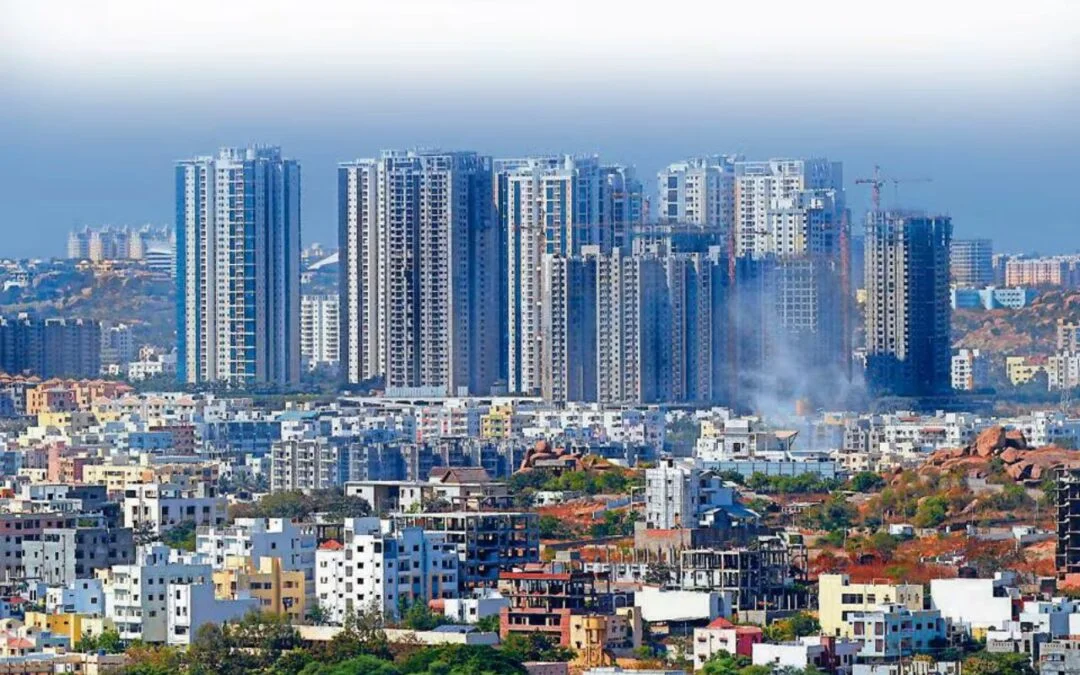
Hyderabad’s real estate market has transitioned from a high-potential emerging destination into one of India’s most stable and demand-driven property markets. Supported by sustained IT growth, expansion of Global Capability Centres (GCCs), and large-scale infrastructure investments, the city has demonstrated consistent residential and commercial absorption over the past decade. This raises an important question for investors and end-users alike: Is this the right time to invest in Hyderabad real estate?
Hyderabad’s Evolution into a Mature Property Market
Unlike several Indian cities that experienced sharp boom-and-bust cycles, Hyderabad has followed a relatively measured growth trajectory. Price appreciation across key micro-markets has remained gradual, driven largely by real demand rather than speculative activity. This stability has helped the city emerge as a preferred destination for long-term residential investment.
The presence of major IT corridors such as HITECH City, Gachibowli, Financial District, and Kokapet has ensured consistent housing demand from professionals employed in technology, life sciences, and allied sectors. Over time, this demand has expanded beyond core IT zones into emerging residential hubs, strengthening Hyderabad’s broader real estate ecosystem.
Role of IT, GCCs, and Employment Growth
Hyderabad has become one of India’s fastest-growing hubs for Global Capability Centres, with multinational companies continuing to expand operations in the city. The steady inflow of skilled professionals has created sustained demand for mid-segment and premium housing, particularly in western Hyderabad.
This employment-led demand has been a critical differentiator for the city. Residential absorption is closely linked to end-use requirements rather than short-term investment sentiment, helping maintain market balance even during periods of economic uncertainty.
Infrastructure Development as a Growth Catalyst
Continuous infrastructure upgrades have played a central role in Hyderabad’s real estate resilience. Projects such as the Outer Ring Road (ORR), radial road networks, metro rail expansion, and improved airport connectivity have enhanced accessibility across multiple residential corridors.
Upcoming infrastructure initiatives are expected to further reduce travel times between residential and employment hubs, encouraging development in peripheral locations. These improvements are gradually expanding the city’s real estate footprint while keeping congestion pressures relatively controlled.
Price Trends and Long-Term Appreciation
Hyderabad has recorded steady price appreciation across residential segments, without the sharp spikes observed in some peer markets. This controlled growth has improved affordability and reduced volatility, making the city attractive for long-term investors seeking capital appreciation with lower downside risk.
Market data indicates that price growth has been supported by genuine demand, rising construction costs, and regulatory compliance under RERA, rather than excessive speculative buying. As a result, inventory levels have remained manageable, and project completion timelines have improved.
Regulatory Environment and Buyer Confidence
The implementation of the Real Estate (Regulation and Development) Act (RERA) has enhanced transparency and accountability in Hyderabad’s property market. Developers are increasingly focused on timely delivery, disclosure compliance, and financial discipline.
For homebuyers and investors, this has translated into improved confidence, better project visibility, and reduced execution risk. Regulatory clarity has also encouraged institutional participation, further strengthening market fundamentals.
Is the Current Market Cycle Favorable?
From a market-cycle perspective, Hyderabad appears to be in a stable growth phase rather than an overheated one. Demand continues to be supported by employment growth and infrastructure expansion, while supply remains aligned with absorption trends.
For investors with a medium- to long-term horizon, this phase offers an opportunity to participate in a market that prioritises sustainability over rapid speculation. End-users, meanwhile, benefit from a wide range of options across budgets and locations.
Hyderabad’s real estate market today reflects maturity, stability, and resilience. Backed by strong economic fundamentals, steady infrastructure development, and a balanced demand-supply dynamic, the city has positioned itself as a relatively safer long-term investment destination within India’s residential real estate landscape.
While individual investment outcomes depend on location, project quality, and holding period, Hyderabad’s broader market indicators suggest that informed, well-researched decisions can align effectively with long-term growth objectives.
Also Read: The Yellow Line Effect: 3 South Bangalore Areas Set to See a Price Explosion by March 2026