


India’s urban landscape is undergoing a significant transformation, with vertical housing emerging as a key solution to address growing population density and limited land availability. Cities such as Bengaluru, Mumbai, and Hyderabad are witnessing an increasing number of high-rise residential developments, particularly in prime urban zones.
Vertical housing refers to multi-storey residential buildings, often designed to optimize land use while accommodating a larger population within urban limits. This model is becoming increasingly relevant in cities where horizontal expansion is constrained.
Why Vertical Housing Is Growing in India
1. Limited Land Availability
In major urban centres, especially Bengaluru, central areas have limited land parcels available for new development. This has encouraged developers to build upwards rather than outwards, with ultra-luxury 4 & 4.5 BHK apartments now defining the skyline in established neighbourhoods.
2. Urban Population Growth
India’s urban population continues to rise steadily, creating demand for housing close to employment hubs, infrastructure, and services.
3. Infrastructure Development
Metro rail expansion, improved road connectivity, and commercial growth corridors are supporting high-density residential projects.
4. Demand for Modern Amenities
High-rise developments often include amenities such as security systems, recreational facilities, and shared infrastructure, making them attractive to urban buyers.
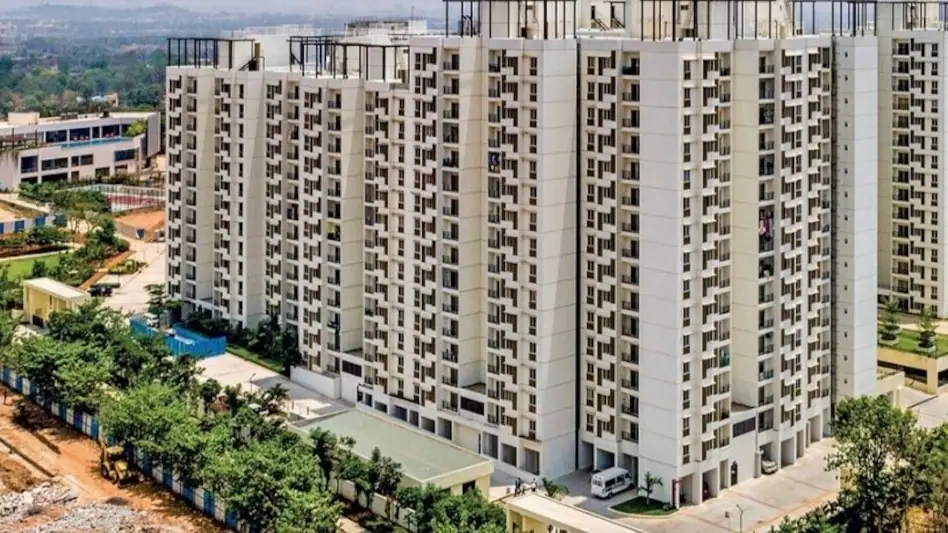
Vertical Housing Trends in Bengaluru
Bengaluru has become one of the leading markets for vertical housing in India. While central areas such as Vasanth Nagar and Cunningham Road focus on boutique high-rise luxury projects, outer regions like Whitefield, Sarjapur Road, and North Bengaluru are seeing large-scale residential towers and gated communities.
Average Price per Sq Ft in Bengaluru
- Central Bengaluru: ₹20,000 – ₹55,000 per sq ft
- Outer Bengaluru: ₹6,000 – ₹12,000 per sq ft
The variation in pricing reflects location, infrastructure access, and project type.
Five-Year Projection for Vertical Housing in India
The vertical housing segment is expected to grow steadily over the next five years due to:
- Continued urbanization
- Infrastructure expansion (metro, highways)
- Increased demand for compact and efficient housing
- Shift toward premium and luxury segments
Projected Growth Trends (2026–2031)
- Average price appreciation: 5%–7% annually in major cities
- Increased share of high-rise housing in urban supply
- Rising demand for gated vertical communities
In Bengaluru, central areas may continue to see limited supply and stable price growth, while peripheral regions are expected to drive volume.
Impact on the Real Estate Sector
1. Efficient Land Utilization
Vertical housing allows developers to maximize land use, especially in high-demand urban zones.
2.Shift in Development Patterns
Developers are moving away from plotted developments toward high-density residential formats.
3.Increased Investment in Infrastructure
Higher population density requires improved infrastructure, influencing government planning and investments.
4.Growth of Premium Housing
High-rise luxury developments are becoming more common in central urban locations.
Challenges Associated with Vertical Housing
- Infrastructure pressure (water, traffic, utilities)
- Higher construction and maintenance costs
- Regulatory approvals and zoning constraints
- Environmental considerations
Despite these challenges, vertical housing continues to be a practical approach for urban expansion.
Regional Highlights
- Bengaluru remains the leading city for vertical housing adoption in Karnataka
- Central areas focus on boutique high-rise luxury projects
- Peripheral zones support large-scale high-rise developments
- Mysuru and Mangaluru are emerging as secondary vertical housing markets
- Demand is driven by urban migration and infrastructure growth
Incredible Urban Transformation in India powered by Vertical Housing Concept:
Summary
Vertical housing is playing a growing role in shaping India’s urban future. With limited land availability and increasing demand for residential space, cities like Bengaluru are adopting high-rise development models to accommodate urban populations efficiently.
As infrastructure improves and urbanization continues, vertical housing is expected to remain a key component of India’s real estate sector.
Also Read: Hyderabad Property Price Growth 2026: Micro-Markets Ranked by Appreciation