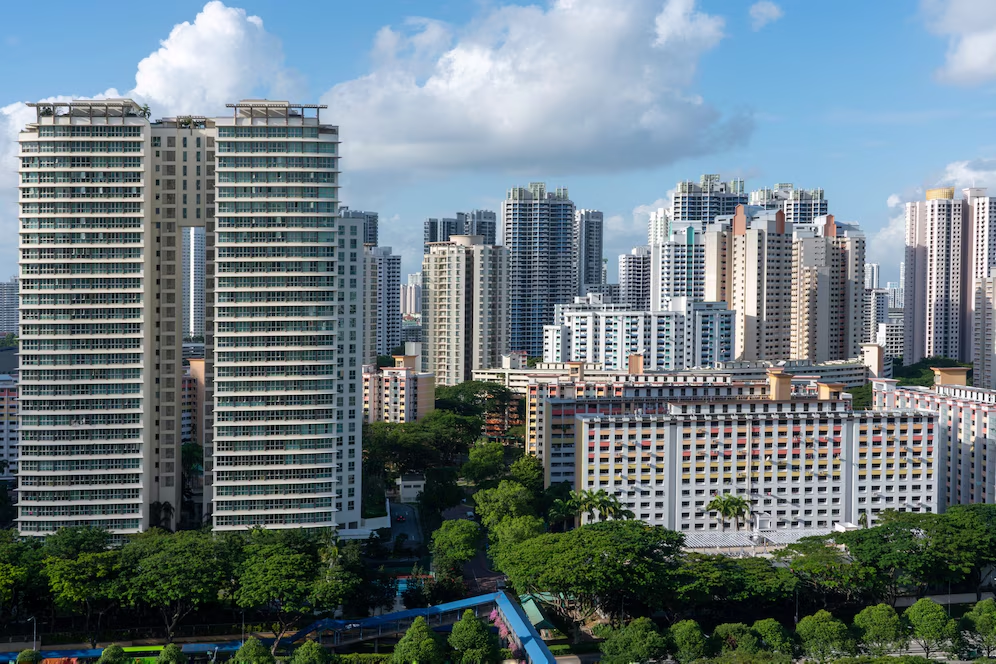


Every residential complex with more than 24 units must have its own Sewage Treatment Plant (STP), according to a major announcement made by the Goa government in an effort to improve wastewater management and environmental sustainability. The ruling is a component of the state’s larger initiatives to guarantee better water supplies and lessen the strain on the current sewage system.
The new rule states that before getting an occupancy certificate, developers building major housing developments must incorporate a functional STP as part of the required building infrastructure. The strategy, according to the Goa State Pollution Control Board (GSPCB), is in line with the increasing demand for effective sewage management, particularly as urbanization continues to rise in important locations like Panaji, Mapusa, Margao, and Porvorim.
Many residential societies presently rely on municipal or common sewage systems, which are frequently overworked and badly maintained, according to officials. In order to encourage decentralized wastewater treatment, the government requires larger complexes to have in-house STPs. By reusing the treated water from these plants for non-potable uses like cleaning, flushing, and gardening, freshwater consumption can be greatly decreased.
Strict compliance requirements are also part of the rule. Housing societies may be asked to provide recurring reports to verify that their plants are operating efficiently, and developers who neglect to install or maintain the STPs may be subject to fines. It is anticipated that the action will establish a standard for ecologically conscious urban development in Goa, motivating builders to use more sustainable and greener building techniques.
The decision has been hailed by experts as a much-needed change to protect Goa’s fragile ecosystem and avoid contaminating groundwater and waterways. According to environmentalists, the program has the potential to significantly contribute to the long-term eco-friendliness and self-sufficiency of Goa’s urban development if it is implemented and monitored properly.
This new rule demonstrates Goa’s dedication to striking a balance between sustainability and growth, making sure that the state’s natural resources are preserved for coming generations even as it continues to draw in new citizens and investment.
Also Read: DRA Homes Announces ₹50 Crore Acquisition of 4.38-Acre Parcel in Chennai