

Maharashtra’s state cabinet has approved two major housing and infrastructure policies that could reshape urban development in the region: a concept-based iconic city development policy and a comprehensive MHADA redevelopment policy.
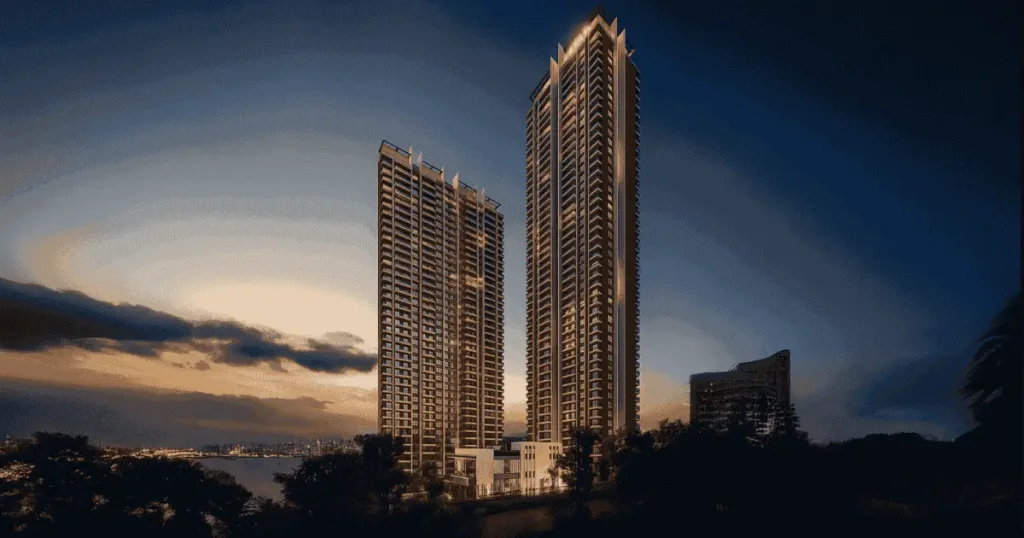
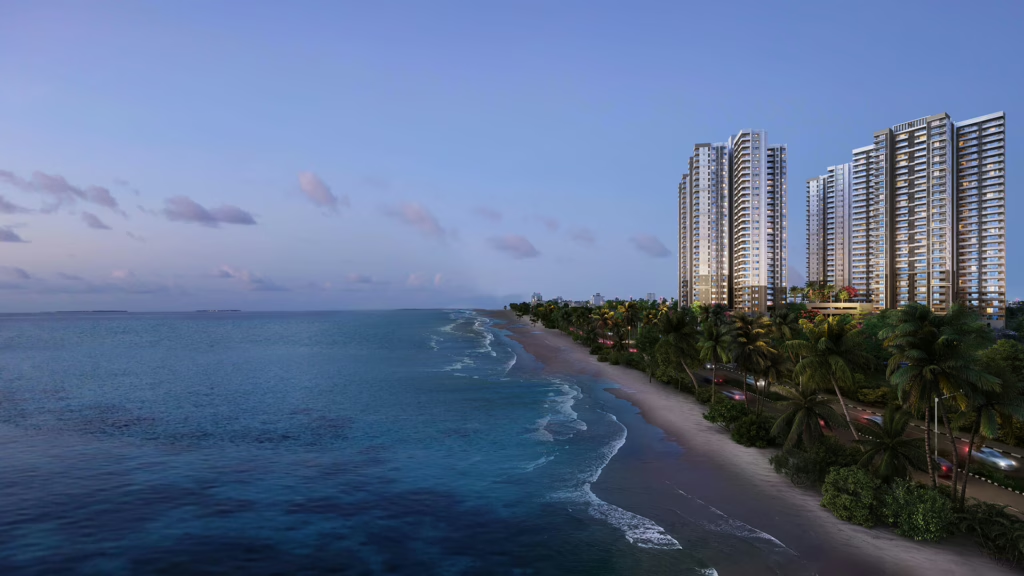
Under the new iconic city development policy, the government will make better use of land held by agencies such as CIDCO. Construction and Development Operators (CDOs) will be selected via competitive tenders to build integrated townships — combining residential, commercial, and international-standard business zones. These operators will have full development rights and the ability to both construct and sell units, helping unlock the potential of underused land. The policy sets strict timelines, outlines revenue-sharing models, and clearly defines developer responsibilities.
On the MHADA front, the cabinet has greenlit the group redevelopment of MHADA colonies measuring 20 acres or more, primarily in Mumbai and its suburbs. Many of these layouts were built between the 1950s and 1960s and today house nearly 5,000 cooperative societies. Many of these buildings are now structurally weak and lack modern amenities.
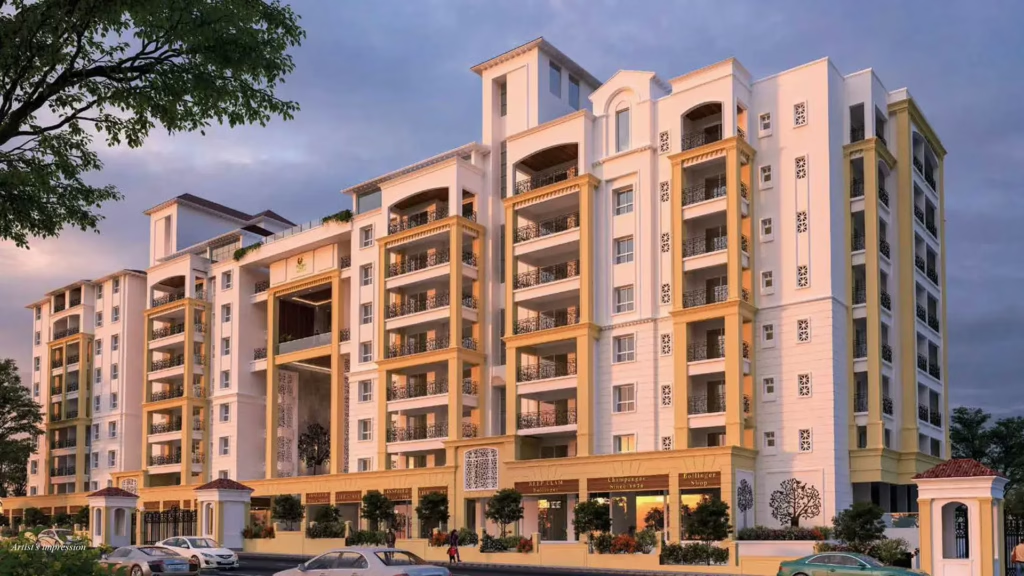
Under the new redevelopment plan, MHADA will replace these aged structures with modern homes featuring lifts, larger living spaces, and better amenities. The upgraded layouts will include community halls, parks, playgrounds, gyms, swimming pools, and enhanced security with CCTV. Infrastructure will also be substantially improved: water supply, sewage networks, electricity, and internal roads will be rebuilt with an emphasis on environmental sustainability.
A key feature of the policy is its flexible rehabilitation model. Developers appointed through tenders can access the maximum permissible rehabilitation FSI (floor space index) without requiring individual consent from every resident. However, they must obtain formal support through resolutions passed by the housing societies. To oversee execution, a specialized high-powered committee, headed by the Additional Chief Secretary (Housing), will monitor the redevelopment process.
Strategically, these twin policies are expected to drive urban renewal in Maharashtra. By freeing up CIDCO land for visionary, high-quality township development, and by revitalizing old MHADA neighborhoods into safe, modern housing clusters, the government aims to deliver more efficient land use and better living conditions — particularly in densely built-up areas.
Also Read: Hyderabad Surpasses Bengaluru to Emerge as India’s Leading GCC Destination in 2025