

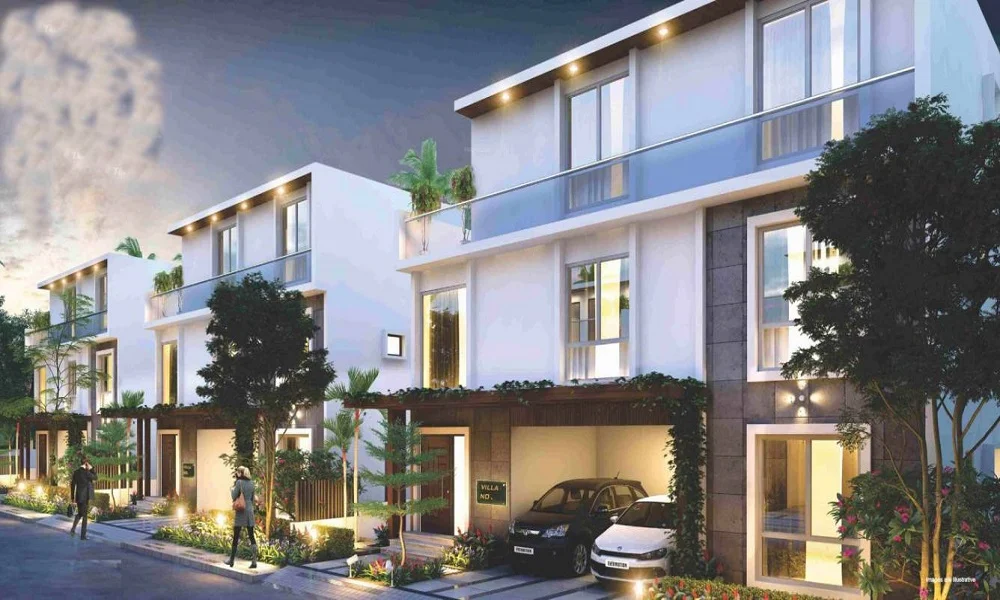
Tellapur, located in the rapidly expanding western corridor of Hyderabad, has steadily transitioned from a peripheral suburb into a prominent residential micro-market. Over the past few years, the locality has attracted significant attention from both developers and homebuyers, largely due to its strategic proximity to major IT hubs such as Gachibowli and the Financial District.
The area’s transformation is closely linked to Hyderabad’s broader growth as a technology and business hub. As employment opportunities have expanded in the western corridor, residential demand has followed, positioning Tellapur as a natural extension of the city’s core IT belt. This shift has resulted in a steady rise in property values, increased project launches, and improved urban infrastructure.
Market Growth and Price Trends
Tellapur’s real estate growth is reflected in both capital appreciation and consistent demand absorption. Over recent years, the locality has recorded notable price increases, supported by infrastructure improvements and sustained buyer interest.
The average property price in Tellapur currently ranges between ₹7,500 and ₹8,200 per square foot, with premium developments crossing ₹10,000 per square foot in select projects. Earlier in the decade, prices were significantly lower, indicating a strong upward trajectory. In fact, the market has seen an estimated capital appreciation of nearly 40% to 50% over a multi-year period, highlighting its transition into a high-growth residential zone.
Another notable aspect of Tellapur’s market is the steady pace of price movement. Unlike speculative spikes seen in some emerging markets, Tellapur has demonstrated gradual and sustained growth, often recording quarterly increases in the range of 3% to 4%. This trend suggests a relatively stable demand base driven by end-users rather than short-term investors.
Rental values in the area have also strengthened in parallel. A typical 2BHK apartment commands monthly rents between ₹40,000 and ₹50,000, supported by demand from professionals working in nearby IT hubs. While rental yields remain moderate at approximately 3% to 4%, the combination of rental income and capital appreciation continues to make the market attractive for long-term investment.
Infrastructure and Connectivity Driving Growth
Infrastructure development has been a central factor in Tellapur’s emergence as a residential hotspot. The locality benefits from strong connectivity to key employment hubs, which significantly enhances its appeal among working professionals.
Tellapur is well connected to Gachibowli and the Financial District, with commute times typically ranging between 20 to 30 minutes depending on traffic conditions. The presence of the Outer Ring Road (ORR) has further improved accessibility, enabling faster connectivity to other parts of Hyderabad, including the international airport.
Looking ahead, planned infrastructure projects are expected to strengthen the area’s connectivity even further. Proposed metro rail expansions and improvements to MMTS rail networks are likely to reduce travel times and improve public transport options. In addition, ongoing road upgrades and urban infrastructure developments are contributing to better livability and ease of access.
The cumulative impact of these infrastructure initiatives is evident in the steady rise in real estate activity across the western corridor, with Tellapur emerging as one of the key beneficiaries.
Changing Supply Dynamics and Housing Trends
-
Shift Toward Premium Housing: There is a clear transition in residential supply toward mid-segment and premium housing, moving away from standalone structures to large-scale developments.
-
Focus on Gated Communities: Developers are prioritizing large gated communities and high-rise complexes designed to meet the specific requirements of modern urban homebuyers.
-
Targeted Pricing Segments: A major portion of the current supply is concentrated in the ₹1.5 crore to ₹2.5 crore price bracket, catering to the high-income profiles of professionals in the nearby IT corridors.
-
Amenity-Driven Demand: There is a heavy emphasis on projects that offer integrated facilities, including high-level security, recreational zones, and robust community infrastructure.
-
Diverse Housing Formats: Beyond standard apartments, the landscape includes luxury villa projects and integrated townships that offer a “city-within-a-city” lifestyle.
-
Integrated Living Experiences: New developments often blend residential units with retail spaces and extensive green areas, reflecting a growing buyer preference for quality of life and community-centric living.
Comparison with Other Hyderabad Micro-Markets
Within the western Hyderabad corridor, Tellapur is often compared with neighbouring locations such as Kokapet, Narsingi, and Kollur. While Kokapet has emerged as a premium micro-market with higher price points, Tellapur offers a relatively balanced proposition in terms of affordability and growth potential.
Narsingi and Kollur, on the other hand, are still in earlier stages of development and offer lower entry prices but comparatively slower appreciation. Tellapur’s advantage lies in its combination of proximity to IT hubs, established infrastructure, and a growing residential ecosystem, which collectively support its positioning as a high-potential market.
Comparison with Karnataka Cities
| City/Locality | Market Profile | Avg. Price Range (per sq. ft.) | Primary Growth Drivers | Investment Outlook |
| Tellapur (HYD) | Emerging Hub | ₹8,500 – ₹10,500 | Proximity to Neopolis & Financial District; ORR connectivity. | High Growth: Optimal balance of value and rapid appreciation. |
| Bengaluru | Mature Market | ₹7,000 – ₹20,000+ | Global Capability Centres (GCCs), IT/Tech ecosystem, Metro Phase 2. | Stable: High entry cost in prime areas; consistent rental demand. |
| Mysuru | Satellite City | ₹4,500 – ₹6,500 | Tourism, education, and spillover manufacturing from Bengaluru. | Moderate: Long-term steady growth; lower entry barrier. |
| Mangaluru | Coastal Hub | ₹5,500 – ₹7,500 | Port-led trade, healthcare, and educational institutions. | Niche: Stable demand driven by port activity and NRIs. |
| Hubballi-Dharwad | Developing | ₹3,500 – ₹5,000 | Industrial corridors and status as a regional commercial center. | Early Stage: High risk/reward for long-term land banking. |
| Belagavi | Developing | ₹3,000 – ₹4,500 | Aerospace/Foundry clusters and interstate trade (MH-KA). | Gradual: Localized growth with slower appreciation cycles. |
Five-Year Outlook and Future Projections
The outlook for Tellapur over the next five years remains positive, supported by a combination of infrastructure development, employment growth, and sustained demand.
Property prices in the area are expected to continue their upward trajectory, with annual appreciation projected in the range of 10% to 15% under stable market conditions. Over a five-year period, this could translate into substantial cumulative growth, particularly in well-located projects.
The expansion of IT hubs in the Financial District and surrounding areas is likely to remain a key demand driver. As companies continue to expand their operations, the need for residential housing within commuting distance will support both sales and rental demand.
Also Read: How GCC Expansion is Driving Commercial Real Estate in Bangalore
At the same time, infrastructure improvements, including metro connectivity and road development, are expected to enhance accessibility and further strengthen the area’s appeal. These factors collectively position Tellapur as a market with sustained long-term growth potential rather than short-term speculative gains.
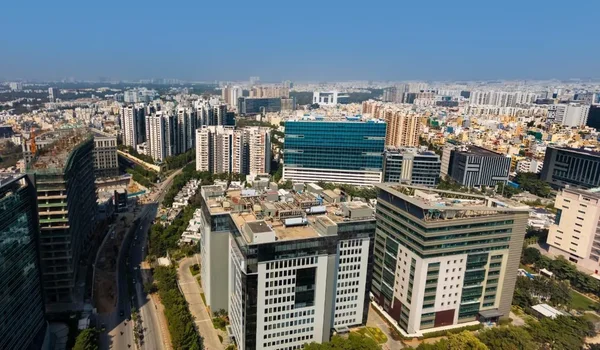
Impact on the Real Estate Sector
The growth of Tellapur is contributing to a broader transformation of Hyderabad’s real estate landscape. The western corridor, in particular, is evolving into a major residential and commercial zone, supported by infrastructure and employment hubs.
This growth has led to an increase in large-scale township developments, reflecting a shift toward integrated urban planning. Developers are focusing on projects that combine residential, retail, and recreational components, creating self-sustained communities.
At the same time, investor interest in the area has increased, driven by the combination of capital appreciation and rental demand. This has resulted in higher transaction volumes and increased market activity.
The expansion of Tellapur also highlights the role of peripheral areas in accommodating urban growth. As central locations become saturated, emerging micro-markets such as Tellapur are expected to play a larger role in the city’s development.
Regional Highlights
Tellapur’s rise can be understood within the broader context of Hyderabad’s western expansion. The area has benefited from its proximity to established IT hubs, improved connectivity, and a steady influx of residential developments.
Its growth trajectory reflects a balance between affordability and premium positioning, making it accessible to a wide range of buyers while still offering strong appreciation potential. As infrastructure continues to improve, the area is likely to remain a key focus for both developers and investors.
FAQs
- What is driving real estate growth in Tellapur, Hyderabad?
Real estate growth in Tellapur is driven by its proximity to IT hubs like Gachibowli and Financial District, improving infrastructure, and increasing demand for residential housing. - What is the average property price in Tellapur?
The average property price in Tellapur ranges between ₹7,500 and ₹8,200 per sq ft, with premium projects exceeding ₹10,000 per sq ft. - Is Tellapur a good investment location in Hyderabad?
Tellapur is considered a high-growth micro-market due to steady price appreciation, infrastructure development, and strong demand from IT professionals. - What are the rental yields in Tellapur?
Rental yields in Tellapur typically range between 3% and 4%, with 2BHK rental values averaging ₹40,000 to ₹50,000 per month. - How is connectivity in Tellapur?
Tellapur is well connected via the Outer Ring Road and offers access to key IT hubs within 20–30 minutes. Future metro and transport projects are expected to improve connectivity further. - How does Tellapur compare with other Hyderabad areas?
Tellapur offers balanced pricing compared to premium areas like Kokapet while providing better growth potential than emerging areas like Kollur. - What type of housing is available in Tellapur?
The area mainly offers high-rise apartments, gated communities, and luxury housing, along with select villa projects and integrated townships. - What is the future outlook for Tellapur real estate?
The market is expected to grow steadily over the next five years, supported by infrastructure expansion, IT sector growth, and increasing residential demand. - How does Tellapur compare with cities in Karnataka?
Compared to cities like Bengaluru, Mysuru, and Mangaluru, Tellapur offers competitive pricing with strong appreciation potential due to Hyderabad’s rapid expansion. - What are the key factors influencing property prices in Tellapur?
Property prices are influenced by infrastructure projects, proximity to IT hubs, demand-supply balance, and the growth of premium residential developments.
Summary
Watch Tellapur: Real Estate, Investment and Growth Analysis
Tellapur has emerged as one of the most promising residential micro-markets in West Hyderabad, supported by strong infrastructure, proximity to employment hubs, and consistent demand. The area’s steady price appreciation, growing supply of premium housing, and improving connectivity have contributed to its rising prominence.
With ongoing infrastructure development and sustained economic growth, Tellapur is expected to remain an important part of Hyderabad’s real estate landscape over the coming years.
Also Read: Foreign Fund Inflows into Indian Real Estate Drop 75% in Q1 2026 Amid Global Uncertainty