
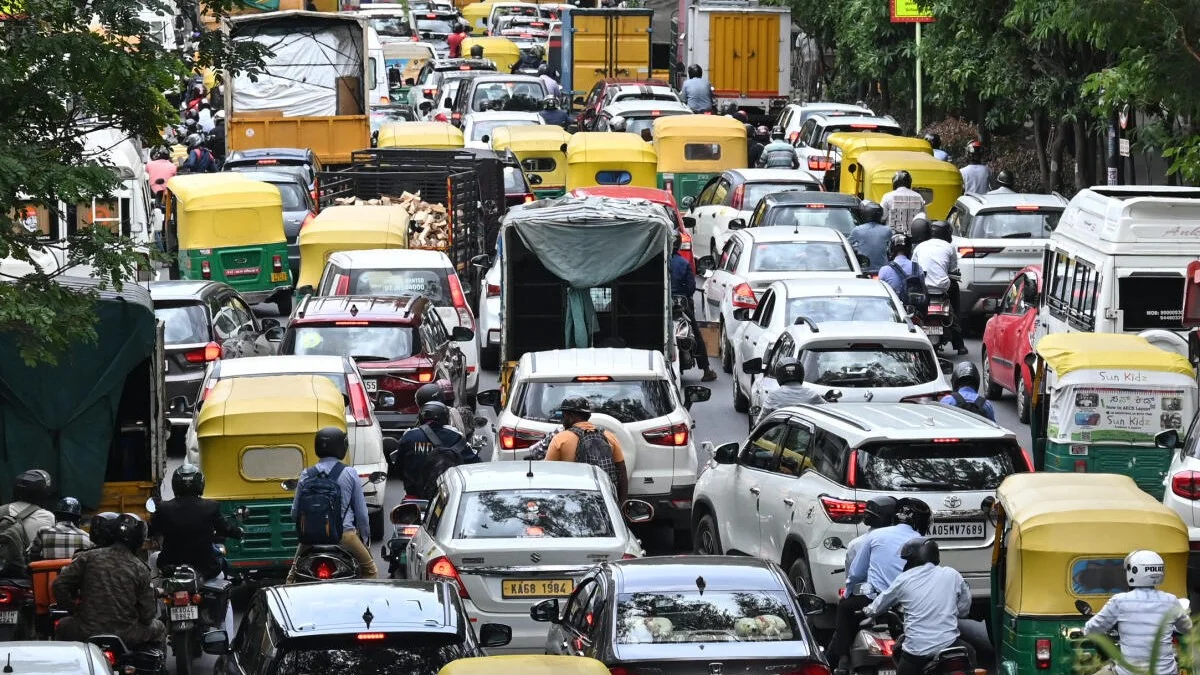
A proposal to introduce a congestion tax in Bengaluru has been suggested by the 5th State Finance Commission in its report for the period 2026–2030. The recommendation was presented in the state assembly as part of broader measures aimed at improving urban mobility and reducing traffic congestion in the city.
According to the report, congestion charges could be applied on high-traffic corridors such as the Outer Ring Road (ORR) and other busy areas of the city. The tax could potentially be collected through FASTag-based electronic systems, allowing automatic deductions when vehicles enter designated zones.
Officials noted that the objective of such a measure would be to discourage excessive private vehicle usage while generating revenue for transportation improvements.
Suggested Measures in the Proposal
The finance panel’s recommendations include a set of traffic management measures intended to improve road efficiency and mobility across Bengaluru.
Key suggestions include:
-
Introduction of congestion charges on busy road corridors
-
Implementation of pay-and-park systems across city zones
-
Identification of no-parking and alternate-side parking areas
-
Use of GIS mapping and demand-based parking pricing
-
Adoption of the parking policy issued by the Directorate of Urban Land Transport (DULT)
Urban mobility experts have stated that congestion pricing is often used globally as a strategy to reduce traffic while encouraging the use of public transport.
Overview of the Congestion Tax Proposal
| Parameter | Details |
|---|---|
| Proposed By | 5th State Finance Commission |
| City | Bengaluru |
| Target Areas | Busy roads such as Outer Ring Road |
| Collection Method | FASTag-based electronic system |
| Objective | Reduce congestion and generate mobility funding |
| Policy Model | Based on congestion pricing used in cities like London |
Cities such as London introduced congestion charges in 2003 to manage traffic in busy urban zones and reinvest the revenue into transport infrastructure.
Infrastructure and Mobility Impact
Bengaluru has been facing increasing traffic congestion due to rapid urban expansion and rising vehicle numbers. Policy proposals like congestion pricing are often explored as part of a broader strategy that combines traffic regulation, parking management, and improved public transport systems.
Potential impacts of the proposal include:
-
Reduction in traffic density in major corridors
-
Encouragement of public transport usage and carpooling
-
Additional revenue for transport infrastructure projects
-
Improved urban mobility planning in high-density areas
Experts suggest that congestion charges, like, other charges work most effectively when combined with strong public transport alternatives and pedestrian infrastructure.