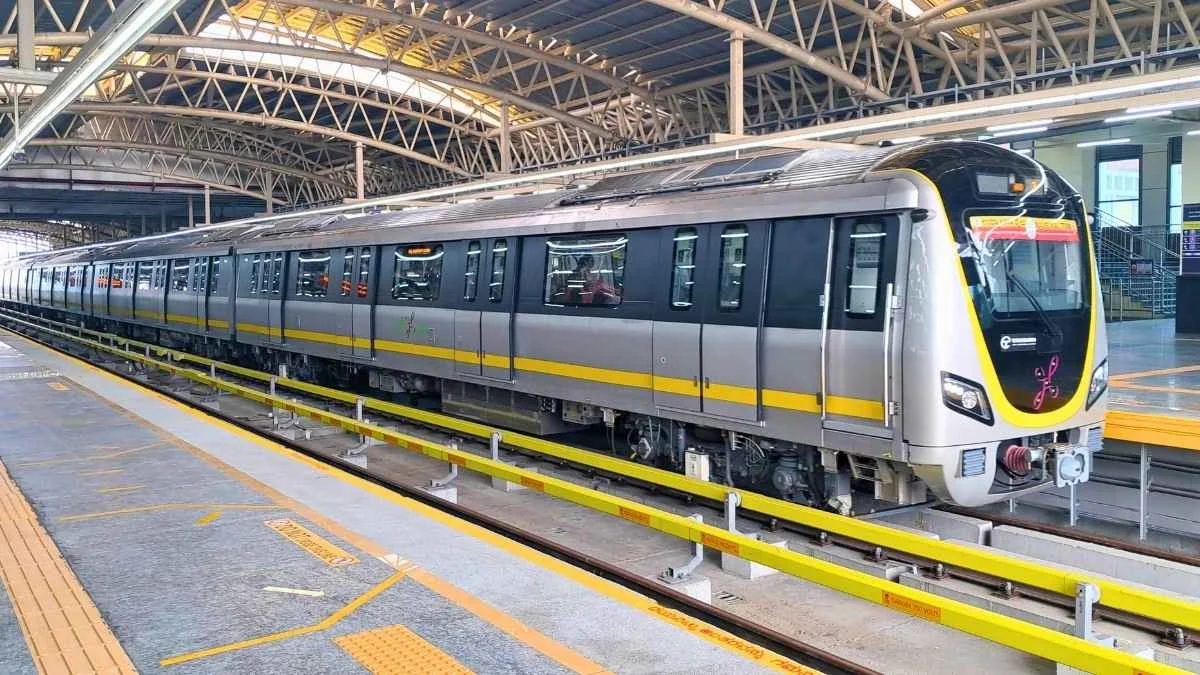
BENGALURU, India — The Namma Metro Yellow Line in Bengaluru has announced improved train frequency from February 27, with services now running at shorter wait times following the induction of an additional train set. According to a report, this service enhancement is expected to benefit commuters and the broader urban transport framework.
Reduced Wait Times: What’s Changing?
Under the new schedule, Yellow Line trains will operate at a 9-minute interval during weekday peak hours — down from previous timing — and at 14-minute intervals during off-peak periods. The frequency enhancement came after Bangalore Metro Rail Corporation Limited (BMRCL) received its eighth trainset for the line earlier this month.
BMRCL introduced the eighth trainset on January 19, which has enabled more efficient circulation of rolling stock and reduced gaps between services. The Yellow Line runs along key south Bengaluru corridors, connecting Rashtreeya Vidyalaya Road in the north to Bommasandra in the south.
Commuter Convenience & Mobility Impacts
Reduced wait time is expected to ease peak-hour congestion around major junctions such as Central Silk Board and along Hosur Road, where daily commuter traffic is typically high. Higher train frequency can encourage shifts from road travel to metro use, temporarily easing surface road congestion.
Transport analysts note that improved headways can enhance the overall capacity and attractiveness of public transit, making metro travel a viable daily option for office commuters, students and professionals working across South Bengaluru IT corridors.
Implications for Urban Transit
The service improvement aligns with broader efforts to strengthen Bengaluru’s urban transit infrastructure. Faster frequency not only improves passenger experience but may also support real estate demand around metro corridors, as efficient mass transit often enhances accessibility and boosts local property interest.
Long-term plans remain focused on further network expansion and additional rolling stock to support even shorter headways in future phases.
Also Read: Sattva City RERA Approved: 2,477 Units Coming to North Bangalore