
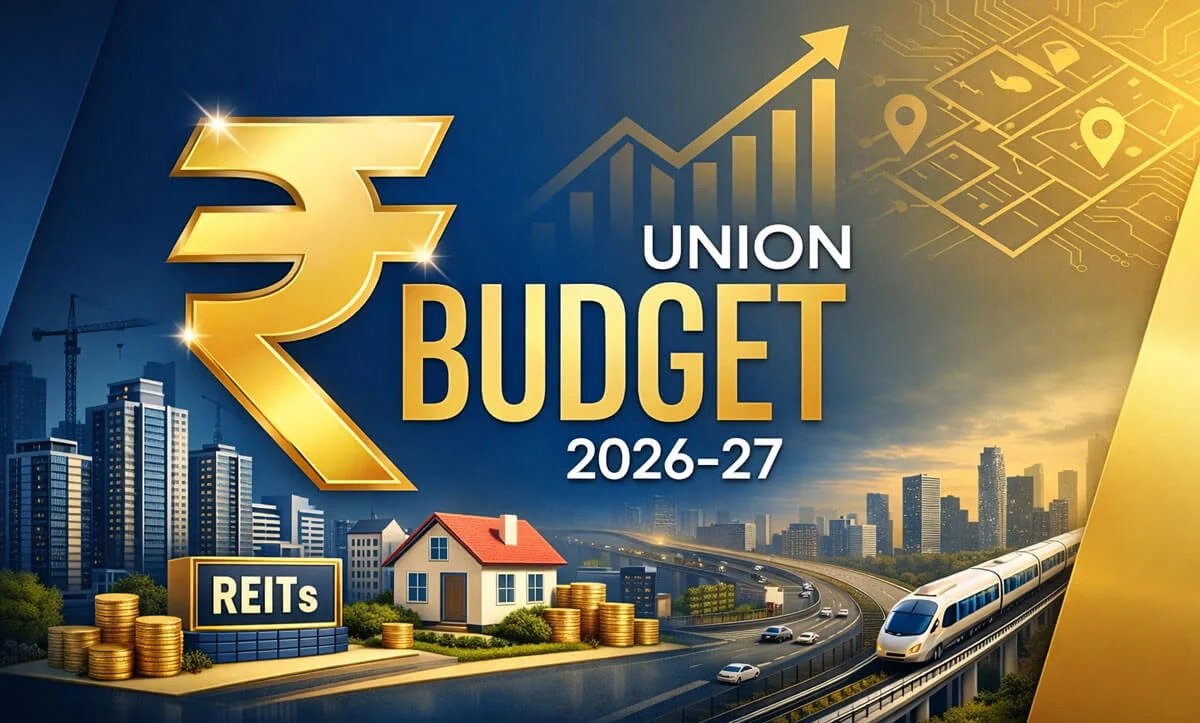
Finance Minister Nirmala Sitharaman’s Union Budget 2026-27 has signaled a paradigm shift for India’s real estate sector, moving away from direct sops to a massive ₹12.2 lakh crore infrastructure-led growth strategy. By focusing on Tier-II and Tier-III cities and pioneering new financial instruments like CPSE-backed REITs, the government aims to decentralize urban growth and unlock property value beyond traditional metros.
1. The “Viksit Bharat” Urban Pivot: Tier-II & III Cities
The centerpiece of the 2026 Budget is the formal recognition of cities with a population over 5 lakh as the next engines of growth.
-
City Economic Regions (CERs): The government has proposed an allocation of ₹5,000 crore to map and develop CERs based on specific local growth drivers.
-
Temple Town Revitalization: Modern infrastructure and basic amenities will be fast-tracked in prominent temple towns to boost religious tourism and local housing demand.
-
University Townships: Five new townships will be established near industrial and logistic corridors, creating a new niche for student and faculty housing.
2. Unlocking Value: REITs and Asset Recycling
To improve liquidity in the sector, the Budget introduces a novel approach to public land management:
-
CPSE Asset Recycling: The government will set up dedicated Real Estate Investment Trusts (REITs) to recycle real estate assets held by Central Public Sector Enterprises (CPSEs).
-
Infrastructure Risk Guarantee Fund: A new fund will provide partial credit guarantees to lenders, aimed at reducing the risk profile for private developers in large-scale projects.
3. Connectivity as a Property Multiplier
Seven high-speed rail corridors, dubbed “Growth Connectors,” are set to redefine peripheral land values:
-
Key Corridors: Routes including Mumbai-Pune, Delhi-Varanasi, and Hyderabad-Bengaluru are expected to drive a 20-35% appreciation in surrounding residential land over the medium term.
-
Dedicated Freight Corridors: New corridors connecting Dankuni (East) to Surat (West) will likely spur demand for industrial and logistics real estate.