
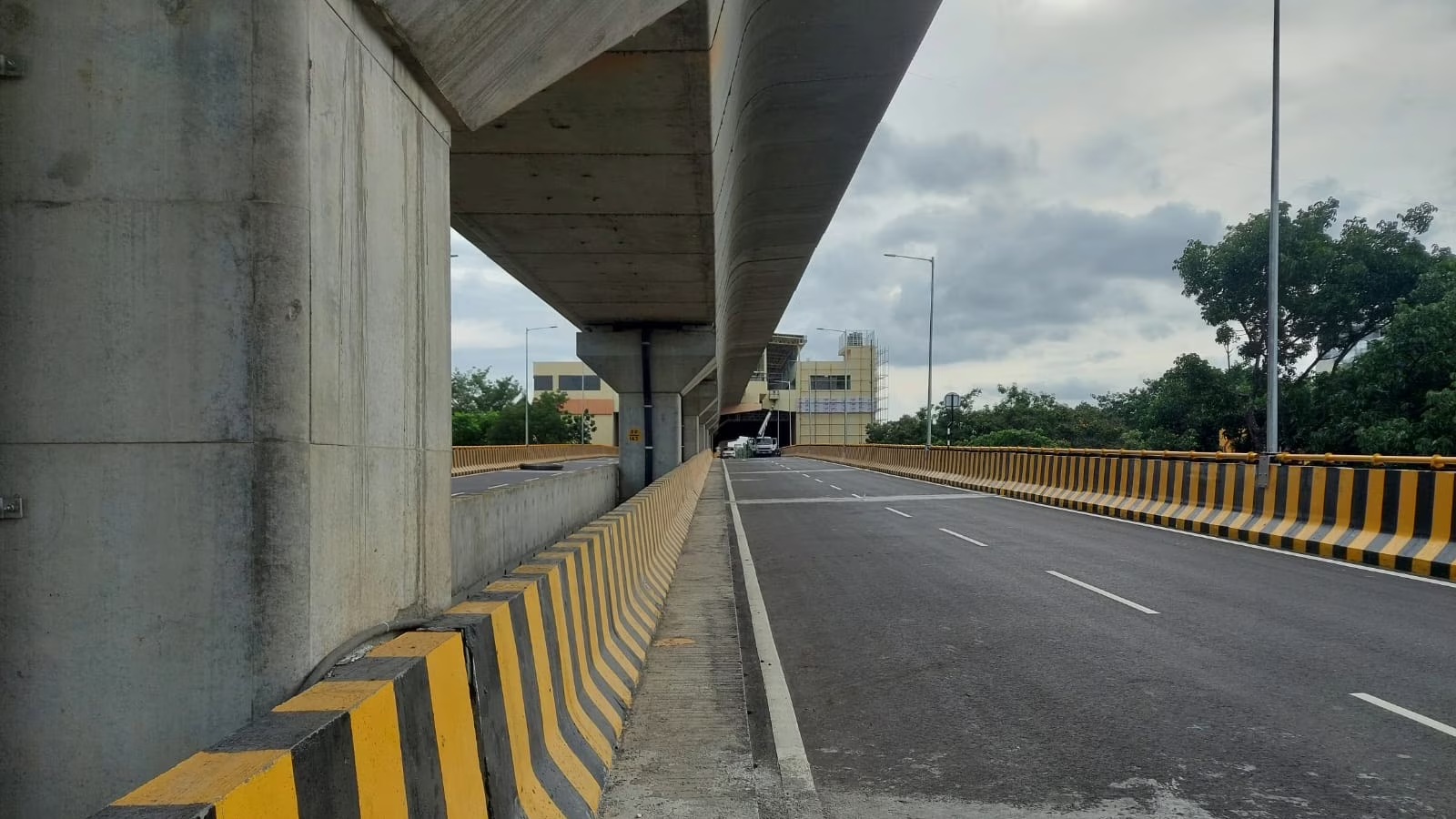
Bengaluru’s double-decker flyover at Silk Board Junction is expected to be fully opened for motorists soon as the remaining construction work approaches completion. The project has been undertaken by Bangalore Metro Rail Corporation Limited (BMRCL) as part of the Namma Metro Yellow Line corridor infrastructure development.
Officials indicated that the remaining 3.5-kilometre stretch between Silk Board Junction and Ragigudda could be operational by the end of March, subject to final approvals and completion of pending works.
The flyover forms a key component of the broader metro infrastructure plan designed to reduce congestion along one of Bengaluru’s busiest traffic corridors.
Project Progress and Construction Timeline
Construction of the double-decker structure has taken several years and is nearing completion.
Key developments include:
-
One side of the flyover between Ragigudda and Silk Board was opened in June 2024.
-
The remaining carriageway works and road laying are largely completed.
-
Installation of traffic signals and final infrastructure checks are ongoing.
-
Full opening is expected once traffic police clearances are obtained.
The project is part of the elevated corridor built alongside the Namma Metro Yellow Line.
Silk Board Flyover Project Overview
| Parameter | Details |
|---|---|
| Project | Silk Board Double-Decker Flyover |
| Implementing Authority | Bangalore Metro Rail Corporation Limited (BMRCL) |
| Corridor Length | Approximately 5 km |
| Remaining Section | 3.5 km (Silk Board to Ragigudda) |
| First Section Opened | June 2024 |
| Expected Completion | End of March (subject to approvals) |
Infrastructure Significance for Bengaluru
Silk Board Junction has long been considered one of the most congested intersections in Bengaluru. The double-decker flyover is designed to improve vehicle movement while supporting metro rail infrastructure.
The project is expected to:
-
Improve connectivity between HSR Layout, BTM Layout, and Ragigudda
-
Reduce traffic congestion at Silk Board Junction
-
Integrate road infrastructure with the Namma Metro Yellow Line corridor
-
Enhance traffic flow toward JP Nagar and Banashankari areas
Authorities stated that the corridor is expected to help streamline traffic movement along the Outer Ring Road and Hosur Road junction.
Real Estate and Urban Development Impact
Large transportation infrastructure projects often influence real estate activity in surrounding areas. Improved connectivity typically enhances accessibility for residential and commercial zones along the corridor.
Potential impacts include:
-
Increased accessibility to HSR Layout, BTM Layout and JP Nagar
-
Higher demand for residential and commercial properties near metro corridors
-
Growth of transit-oriented development projects
-
Strengthening of south Bengaluru’s urban connectivity
Infrastructure upgrades such as the Silk Board flyover are part of broader efforts to address traffic challenges in rapidly expanding urban areas.
Also Read: Brigade Group Announces Entry into Industrial Real Estate