
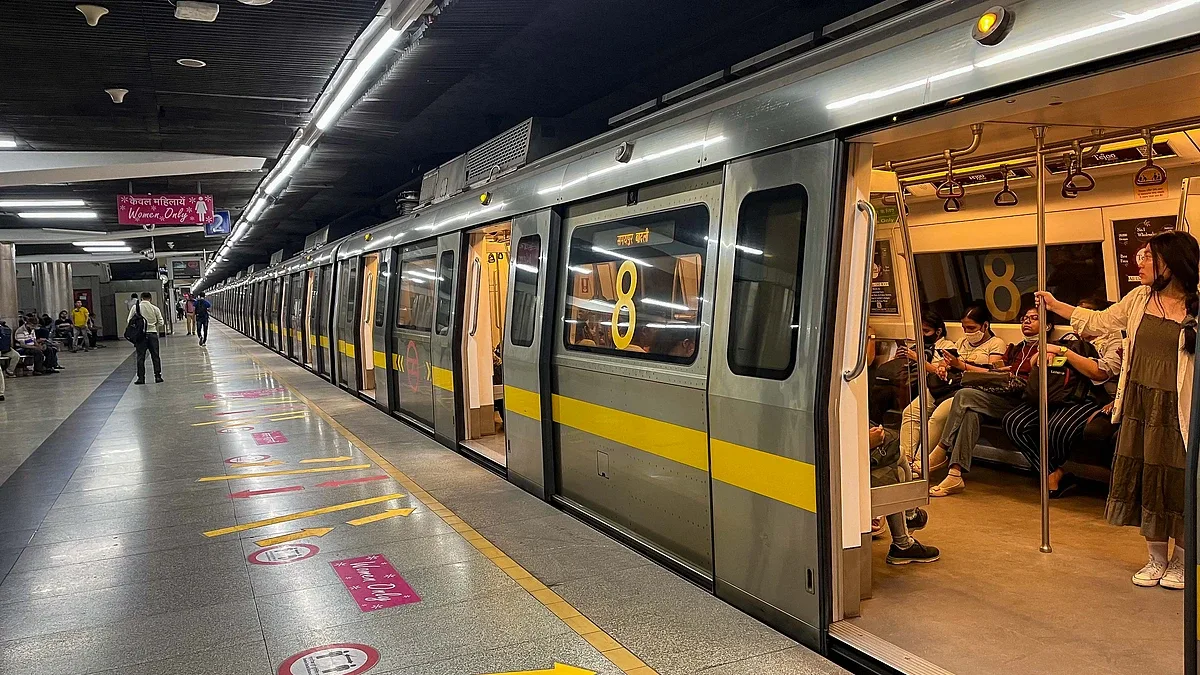
The Union Cabinet has approved three new metro stretches in Delhi as part of the Delhi Metro Phase V(A) expansion, marking a significant step towards strengthening urban transport infrastructure in the national capital. The decision, taken under the chairmanship of Prime Minister Narendra Modi, aims to improve connectivity, reduce travel time and support sustainable mobility across key parts of the city.
The approved metro expansion covers a total length of 16.076 kilometres and includes 13 new stations, of which 10 will be underground and three elevated. The estimated project cost stands at Rs 12,014.91 crore. Funding for the project will be shared by the central government, the Delhi government and other institutional sources. The new corridors are expected to be completed within a span of three years.
One of the most prominent corridors approved is the stretch connecting RK Ashram Marg to Indraprastha, often referred to as the Central Vista corridor. Spanning approximately 9.91 kilometres, this route will improve metro access to key administrative, cultural and public spaces in central Delhi, including government offices and major public venues. The corridor is expected to benefit daily office commuters as well as visitors to the area by offering seamless and direct metro connectivity.
Another approved stretch connects Aerocity to Indira Gandhi International Airport Terminal 1. With a length of about 2.26 kilometres, this corridor will strengthen airport connectivity and provide faster transit options for domestic air travellers, supplementing existing metro links in the region.
The third corridor extends from Tughlakabad to Kalindi Kunj, covering nearly 3.9 kilometres. This stretch is expected to enhance connectivity in south Delhi by linking residential areas with commercial and transit hubs, thereby improving daily commuting options for residents.
Once operational, the new metro stretches will further expand Delhi Metro’s network beyond 400 kilometres. Officials expect the expansion to help reduce road congestion, lower vehicular emissions and encourage greater use of public transport. The approval aligns with the government’s broader focus on improving urban infrastructure and promoting efficient, environment-friendly transportation systems in major cities.
Also Read: My Home Grava Neopolis in Hyderabad Records Steady Construction Progress