

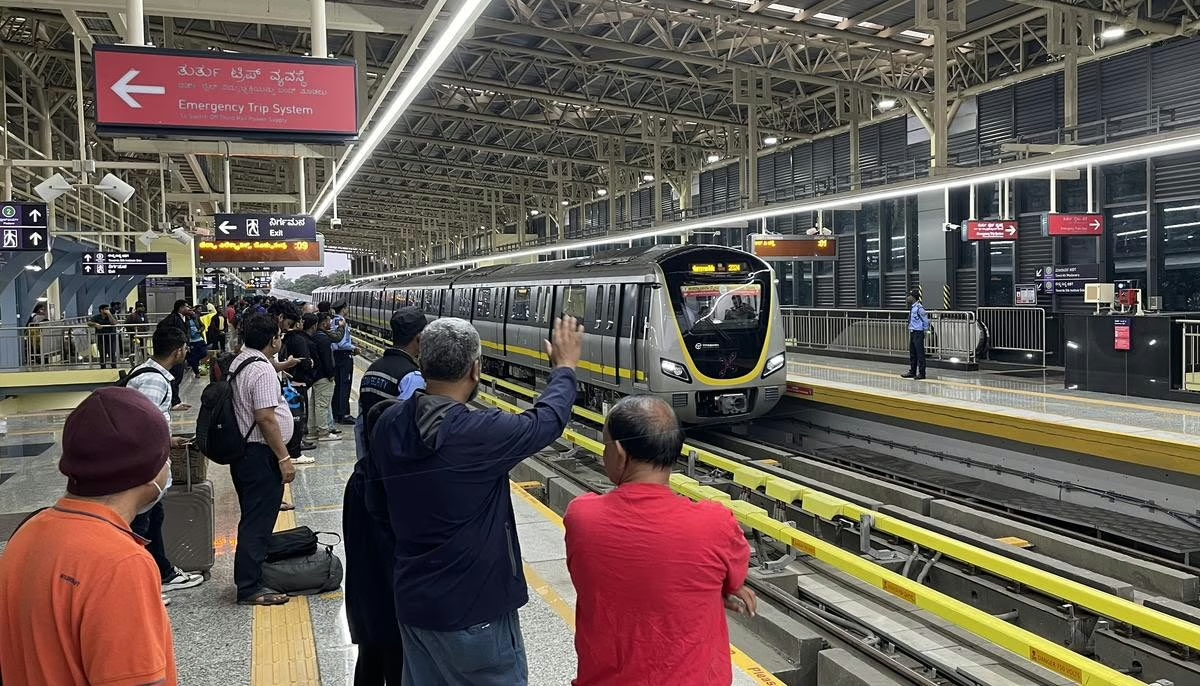
Bengaluru’s newly operational Yellow Line of Namma Metro has brought measurable relief to congestion on South Bengaluru roads during peak hours. A recent traffic study reports that congestion has dropped by approximately 37.5% during peak-travel times in key South Bengaluru corridors since the Yellow Line’s launch.
The reduction is most visible on stretches heavily used by daily commuters, including the Silk Board to Bommasandra route. Traffic police observations and traffic management data show that large numbers of commuters have switched to metro travel, easing pressure on road networks that were earlier choked during morning and evening rush hours.
The Yellow Line connects Rashtreeya Vidyalaya Road to Bommasandra, covering important parts of the city that link IT clusters, residential zones, and arterial roads. With sixteen stations in operation, the line provides an elevated alternative for travel that bypasses many of the road-traffic bottlenecks.
Commuters report shorter travel times, especially during evening hours, thanks to the metro’s ability to avoid signal delays and road congestion. Authorities have noted that the shift in commuter choice is already reflected in traffic flow improvements on major roads that converge into and out of South Bengaluru.
While the improvement is significant, officials also mention that further reductions in congestion depend on additional measures. These include increasing train frequency, improving last-mile connectivity (such as feeder buses or walkways), and ensuring station access.
Overall, the Yellow Line is demonstrating its role not just as new infrastructure but also as a traffic-management tool for the city. As more operational capabilities come online and as commuters adapt, further declines in vehicular congestion are expected across the affected roads in South Bengaluru.
Also Read : Bengaluru’s Pink Metro Line to Open in Two Phases by 2026