
Delhi NCR property guide
India's largest residential real estate market — ₹8,300/sqft city average with Gurugram luxury at ₹11,300, Noida at ₹9,200, and Greater Noida at ₹6,600; 81% appreciation in 5 years; a premium-dominated Q1 2026 surge of 30%; and the Jewar International Airport, RRTS, and Delhi Metro Phase IV converging to create the country's most infrastructure-rich property corridor.
Delhi NCR property market today
Market pulse
Delhi NCR's 2026 market is India's largest and most premiumised. The NCR average crossed ₹8,300/sqft in Q1 2025 — up 81% in five years (Anarock). Sub-city divergence is significant: Gurugram ₹11,300/sqft (+84%), Noida ₹9,200/sqft (+92%), Greater Noida ₹6,600/sqft (+98%) — each starting from different bases in 2020. Q1 2026 reported a 30% surge in housing sales QoQ with apartments above ₹1 crore accounting for 71% of all sales (JMS Group), confirming the decade's structural shift from affordable to premium and luxury. Unsold inventory has been slashed by 51% — from 173,117 units to 84,500 — between Q1 2020 and Q1 2025 (Anarock), meaning supply is genuinely constrained in well-located micro-markets.
The 2026 macro picture is stabilisation after a spike. CBRE's India Residential Market Outlook 2026 notes that for the first time since the post-pandemic boom, household income growth in NCR is projected to outpace property price appreciation — stabilising the EMI-to-income ratio. Key corridors in Gurugram rose nearly 160% between 2019 and 2024 (CBRE), pricing out first-time buyers but leaving premium buyers — earning ₹75 lakh+ annually — better positioned than at any point since 2020. Knight Frank reported NCR posted a 9% YoY sales decline in 2025, attributing it to price escalation and limited mid-income supply in good locations, not to demand destruction — a distinction investors need to hold.
The structural catalyst is a convergence of three infrastructure programmes. Delhi Metro Phase IV is extending metro to underserved western and southern zones. The Delhi–Meerut Regional Rapid Transit System (RRTS) became operational in 2026, redefining the definition of "commutable distance" and unlocking a new peri-urban growth belt. Noida International Airport at Jewar — 1.3 times the size of IGI — is in active construction; its immediate hinterland (Yamuna Expressway, Greater Noida) is already pricing in the impact. The Reuters poll of property analysts (Feb–Mar 2026) forecasts NCR prices rising 5–7% annually over the next three years. The highest-conviction zones are Dwarka Expressway (premium, near IGI), Noida Expressway (IT anchor + Aqua Line metro), and Yamuna Expressway (Jewar pre-launch play).
Get the Delhi NCR price report
Live prices straight from developer price sheets, not listing portals.
- Rate per Sq.Ft. and all-in price for each project
- Upcoming launches before they open
- Current offers and payment plans
Where should we send it?
Sent to your phone within 30 minutes, 9 AM to 9 PM.
Find your area in Delhi NCR
Start from who you are, not from a map. Our picks for the most common buyer profiles.
Senior corporate professional or C-suite executive
NCR's ultra-luxury premium belt — DLF, Emaar, M3M, Sobha delivering ₹5–25 Cr projects; Golf Course Extension and SPR are India's fastest-appreciating luxury corridors with 160% gains since 2019.
IT or GCC professional working in Noida or Gurugram
Best work-commute-to-value ratio in NCR; Noida Expressway near IT clusters (TCS, Infosys, HCL); Sector 150 green township; Dwarka Expressway 15 min from IGI Airport.
Long-horizon investor seeking maximum capital upside
Jewar airport corridor (Yamuna Expressway) is India's most concentrated pre-airport land play; Greater Noida already delivered +98% in 5 years at the most affordable entry points in NCR.
NRI buying a premium second home or investment asset
NCR has the deepest resale market in India for premium assets; Golf Course Extension and Noida Expressway are NRI-preferred — brand-anchored projects, professional management, and direct IGI/Jewar airport access.
First-time buyer on ₹60L–₹1.2 Cr budget
Greater Noida West (Noida Extension) has the best RERA-compliant 3 BHK inventory under ₹1 Cr in NCR; Indirapuram for Delhi-city proximity; Sohna Road for New Gurugram entry.
Family with school-going children
Dwarka Expressway has the best school-hospital-mall cluster in western NCR; Sector 150 Noida is a planned green township with upcoming school cluster; South Delhi for legacy premium school chains.
Latest projects in Delhi NCR
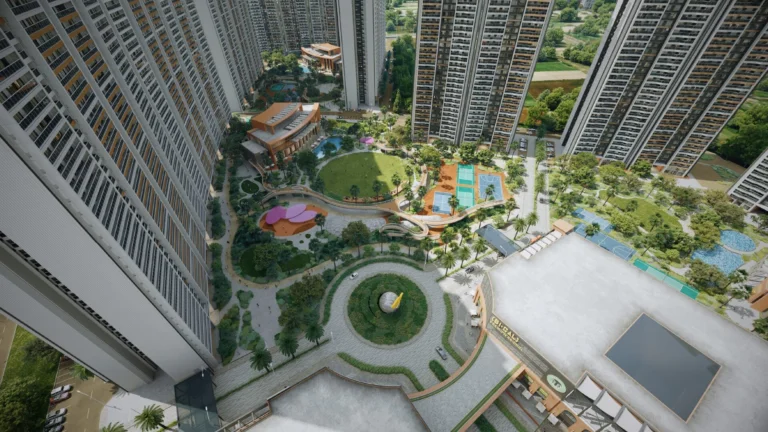
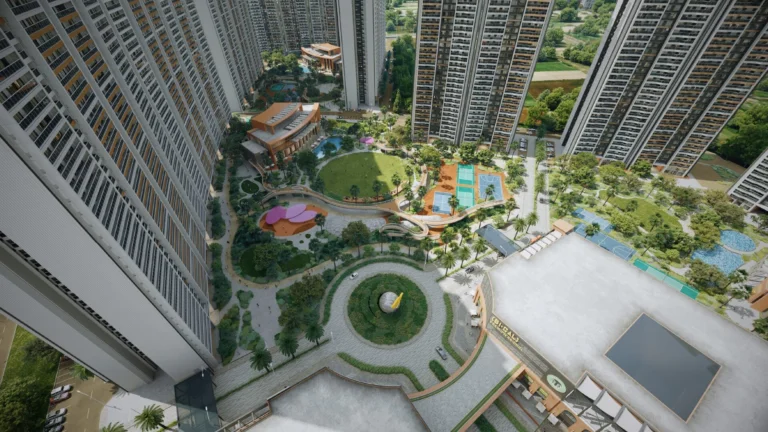
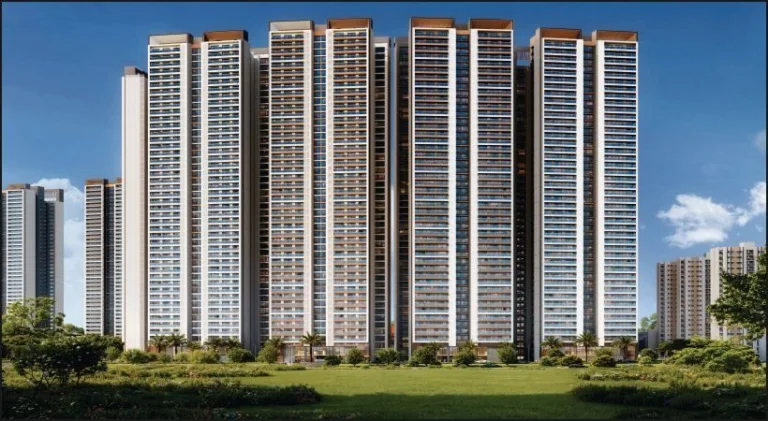
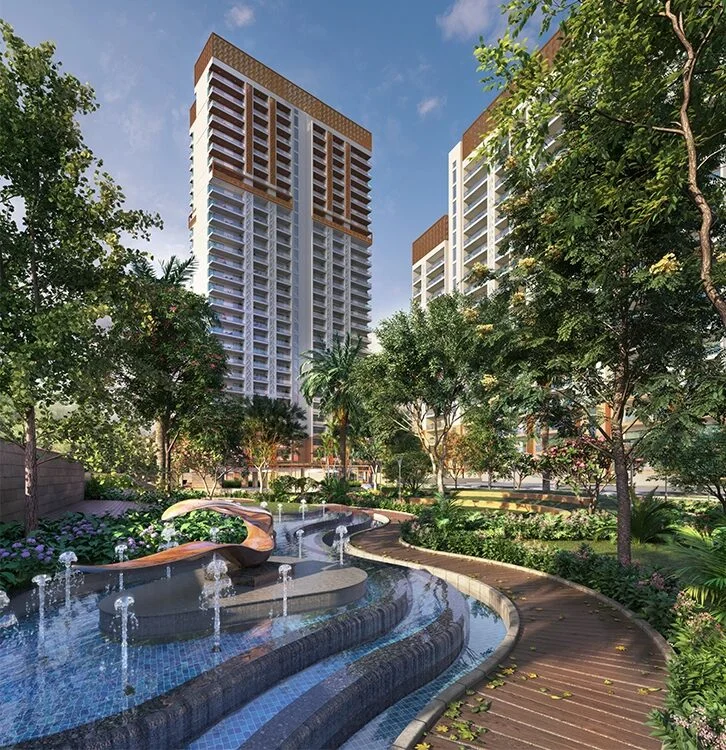
Recently added launches from 6 live projects across the city.
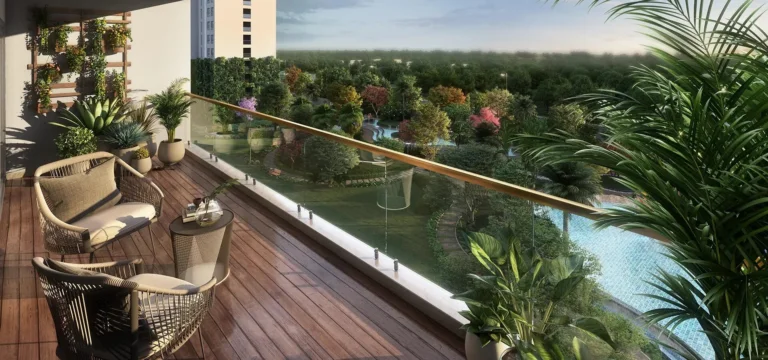
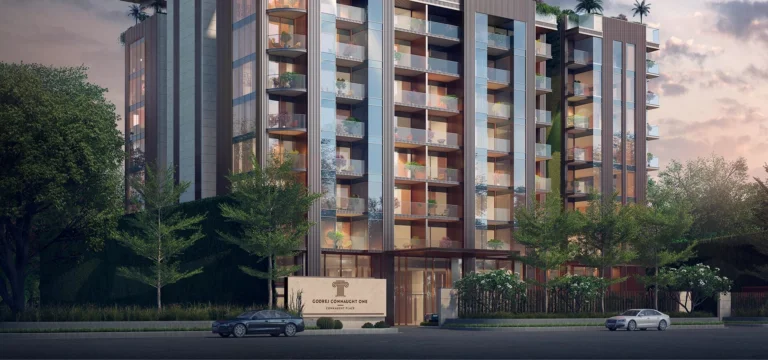
Looking at 6 projects is a lot.Tell us your budget and commute and get the best 3 to 5 on one call.
Most active builders in Delhi NCR
 Godrej Properties50 projects

Questions buyers ask about Delhi NCR
Is Delhi NCR a good place to invest in real estate in 2026?
Yes, selectively. NCR is India's largest residential market with genuine supply constraint — unsold inventory has been cut by 51% since 2020 — and infrastructure-driven demand across three major catalysts: RRTS Delhi–Meerut (operational 2026), Metro Phase IV (ongoing), and Noida International Airport at Jewar (under construction). NCR prices rose 81% in five years and 12–15% annually in 2025–26. Q1 2026 saw a 30% QoQ sales surge with 71% of transactions above ₹1 Cr. Watch-outs: 2025 saw a 9% YoY sales dip (Knight Frank) — a signal that mid-income supply is scarce and the market has become selective. Stick to RERA-compliant projects in metro/expressway-linked corridors from established developers (DLF, Godrej, Tata, Sobha, Emaar) to avoid legacy delay risk.
Which area is best to buy in Delhi NCR?
Depends on profile and budget. For ultra-luxury (₹5–25 Cr), Golf Course Extension and Dwarka Expressway in Gurugram lead. For IT professionals, Noida Expressway (Sectors 137, 150) has the best work-home-metro alignment. For Jewar airport upside, Yamuna Expressway and Greater Noida West offer the earliest-stage entry with +98% already delivered over 5 years. For first-time buyers, Greater Noida West remains the best RERA-approved 3 BHK inventory under ₹1 Cr in NCR. For families, Dwarka Expressway clusters top schools, hospitals, and greenery within the western corridor.
What is the average property price per sqft in Delhi NCR in 2026?
NCR avg was ₹8,300/sqft in Q1 2025, up 81% from ₹4,580 in Q1 2020. By sub-city: Gurugram ₹11,300/sqft (+84%), with premium corridors (Golf Course Extension, DLF 5) reaching ₹15,000–25,000+. Noida ₹9,200/sqft (+92%); Noida Expressway avg ₹8,400; premium Sector 150 reaching ₹14,946 and projected ₹18,000–22,000 by 2027. Greater Noida ₹6,600/sqft (+98%), with Yamuna Expressway at ₹6,600 projected to ₹8,500–10,500 by 2027. Delhi city (South Delhi) ₹8,000–21,000+ depending on colony. Ghaziabad and Indirapuram: ₹4,500–7,500 for mid-segment.
How much does a 3 BHK flat cost in Delhi NCR in 2026?
Greater Noida West / Noida Extension: ₹70 lakh–₹1.3 Cr (best value in NCR). Ghaziabad / Indirapuram: ₹80 lakh–₹1.4 Cr. Noida Expressway (Sector 137, 150): ₹1.4–3.5 Cr. Dwarka Expressway Gurugram (mid-segment): ₹1.2–2.5 Cr. Dwarka Expressway Gurugram (premium): ₹2.5–5 Cr. Golf Course Extension / DLF 5 / SPR: ₹3.5–12 Cr. Ultra-luxury South Gurugram or South Delhi: ₹10–25 Cr+. Rentals: 3 BHK in Noida Expressway Sectors 150/107 targets ₹30,000–40,000/month; in Gurugram Cyber City belt ₹40,000–80,000. Stamp duty in Delhi: 4% women / 6% men. Haryana (Gurugram): 7%. UP (Noida): 7%.
What is the Noida International Airport and how does it affect real estate?
The Noida International Airport at Jewar (also called Jewar Airport) is under active construction and when complete will be 1.3 times the size of Indira Gandhi International Airport, making it one of Asia's largest. It is planned to connect to Delhi via the Yamuna Expressway and a proposed RRTS link. The immediate hinterland — Yamuna Expressway sectors, Greater Noida, and Knowledge Park — has been pricing in the airport premium for years; Greater Noida has already posted +98% appreciation over 5 years. Once operational (projected 2025–26 for Phase 1), the airport is expected to transform the Yamuna Expressway from an "extended periphery" to an "aerotropolis corridor," similar to what Bengaluru Airport did for Devanahalli-Hebbal. Investors in Sectors 22D, 17, and Yamuna Expressway plots have been the primary early beneficiaries.
How will the RRTS and Metro Phase IV change NCR real estate?
The Delhi–Meerut RRTS became operational in 2026, running at 180 kmph and connecting Delhi–Ghaziabad–Meerut in under an hour. Knight Frank's report highlights this corridor as a new residential growth belt: Ghaziabad micro-markets (Indirapuram, Vaishali, Modinagar belt) are seeing fresh demand from professionals who want a Delhi-commutable address at 40–50% the price of Gurugram. Delhi Metro Phase IV is adding new corridors to underserved western and southern zones (including extensions toward Inderlok–Indraprastha and Mukundpur–Maujpur), with metro-adjacent properties historically commanding 8–15% premiums. Together, RRTS and Metro Phase IV are expanding the "viable commute zone" from within a 30-km radius to a 60–80-km radius, redefining what counts as "NCR real estate" and unlocking new land-banking opportunities in Hapur, Bulandshahr, and Meerut city belts.
How does Delhi NCR compare to Mumbai and Bengaluru for real estate investment?
Three very different propositions. Mumbai is India's most liquid market — deepest resale, strongest commercial rental base, and a financial capital premium that holds even in slow cycles; but ₹19,000+ per sqft average makes entry prohibitive. Bengaluru is the GCC-employment-driven end-user market with the most consistent 10–13% annual appreciation, strong rental yields, and the most rational supply-demand balance. NCR is the scale play — the largest market by volume, widest micro-market diversity (from ₹3,500/sqft in Ghaziabad plots to ₹25,000+ in DLF 5 Gurugram), strongest infrastructure investment pipeline (RRTS + Jewar + Metro IV), and 81% 5-year appreciation — but it is also the most investor-dominated (less end-user depth) and carries higher speculative risk in some corridors. For long-horizon capital appreciation in premium corridors, NCR leads; for stable yield and lower risk, Bengaluru is safer; for liquidity, Mumbai.
What infrastructure is coming to Delhi NCR in the next 2-3 years?
Five major catalysts. (1) Noida International Airport (Jewar) Phase 1 — under active construction; will create an aerotropolis corridor along Yamuna Expressway with Sectors 17, 22D, and 33 as the primary residential beneficiaries. (2) Delhi Metro Phase IV — multiple corridors under construction linking Janakpuri–RK Ashram Marg, Inderlok–Indraprastha, and Mukundpur–Maujpur; metro-adjacent properties historically 8–15% premium. (3) Delhi–Mumbai Expressway — partial completion in 2025 already improving Gurugram logistics and Manesar industrial corridor; full 1,350-km expressway unlock by 2027. (4) FNG Expressway (Faridabad–Noida–Ghaziabad) — 70% complete; will create a cross-corridor link improving Noida Sectors 117–123 and 150. (5) Gurugram Global City — a planned 1,000-acre greenfield business and financial hub adjacent to Dwarka Expressway with international convention centre, diplomatic enclave, and premium residential; active land acquisition underway.
Not sure which part of Delhi NCR suits you?
One call with our advisors covers areas, budgets, commute and the best live projects, with direct developer pricing.