
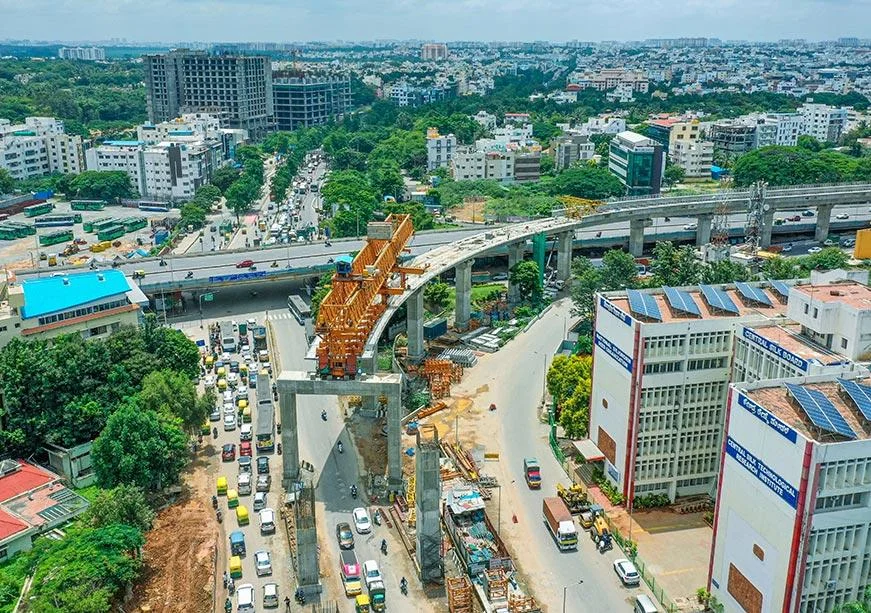
Bengaluru’s Metro Phase 3A has been expanded with the addition of a 6.6-km Kadabagere–Tavarekere corridor, enhancing the scope of the city’s rapid transit network. The newly included stretch will be a fully elevated line connecting areas in the southwestern part of the city, along Magadi Road.
Originally, Phase 3A was planned to include only the Sarjapur–Hebbal corridor, but the state government has decided to integrate this additional line to improve connectivity and fast-track infrastructure approvals.
Project Details and Planning Progress
The Kadabagere–Tavarekere corridor is expected to include multiple stations and will extend connectivity across emerging residential and semi-urban zones. Authorities have indicated that the Detailed Project Report (DPR) for this stretch will be prepared alongside the Sarjapur–Hebbal line.
The broader Phase 3A plan includes:
- Sarjapur–Hebbal corridor spanning over 36 km
- Combination of elevated and underground sections
- Integration with existing metro lines across the city
- Expected groundwork timeline targeted toward 2027-end
The project is part of Bengaluru’s long-term urban mobility strategy aimed at reducing congestion and improving public transport accessibility.
Connectivity Benefits Across Key Zones
The addition of the new corridor is expected to link peripheral areas with central and eastern Bengaluru, providing improved access to employment hubs and commercial zones. It also aims to reduce dependency on road transport in rapidly growing suburban areas.
The integration of multiple corridors within Phase 3A is likely to create a more interconnected metro network, improving last-mile connectivity and transit efficiency.
Real Estate Impact: Emerging Corridors Gain Momentum
The expansion of metro infrastructure is expected to influence real estate dynamics across the city, particularly in developing regions.
Improved connectivity in areas like Kadabagere and Tavarekere may lead to increased residential demand, as buyers seek locations with better transit access. Developers are likely to explore new project launches in these corridors, supported by rising land value and infrastructure growth.
At the same time, the Sarjapur–Hebbal line is expected to strengthen property demand across established IT and residential hubs, reinforcing Bengaluru’s position as a transit-oriented real estate market.
Infrastructure Impact Overview
| Key Aspect | Expected Outcome |
|---|---|
| Metro Network Expansion | Improved city-wide connectivity |
| Peripheral Development | Growth in emerging residential zones |
| Property Demand | Increased interest near metro corridors |
| Traffic Reduction | Lower congestion on major roads |
| Investment Potential | Higher real estate activity in connected areas |
Outlook for Bengaluru’s Metro Growth
With the inclusion of the Kadabagere–Tavarekere corridor, Metro Phase 3A is expected to play a crucial role in shaping Bengaluru’s future mobility network. As infrastructure projects continue to expand, metro connectivity is likely to remain a key driver of urban growth and real estate development across the city.
Also Read: Lodha Developers Reports Q4 Growth with Higher Revenue and Dividend Announcement

Alkka Roy writes about real estate trends, property insights, and investment opportunities, helping readers make informed decisions in a dynamic market.
Related news


 7 May 2026 · ConnectivityAlignment Plans Finalised for Bengaluru-Chennai and Bengaluru-Hyderabad Bullet Train Corridors