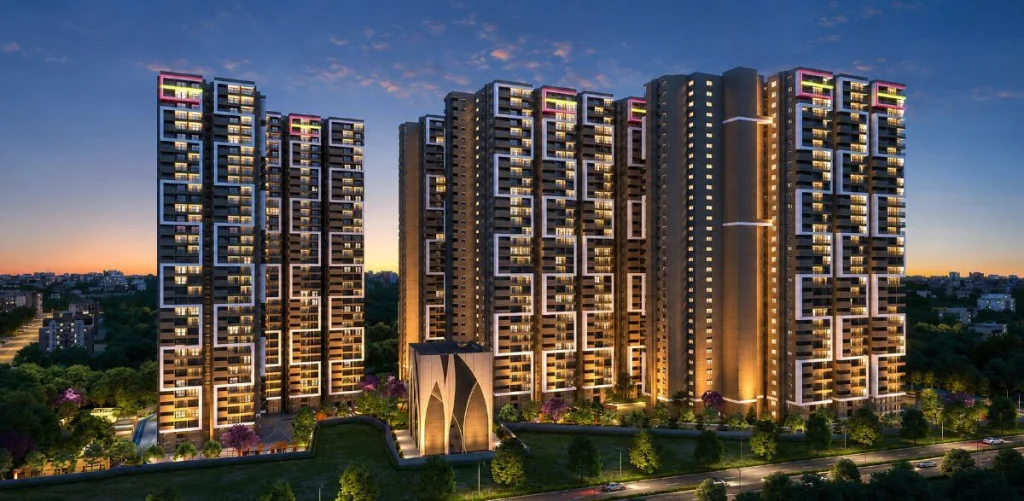


Bengaluru, June 4, 2025 — In a decisive move to strengthen environmental regulations, the Karnataka State Pollution Control Board (KSPCB) has issued a directive requiring all multi-storey residential projects to secure environmental clearances before receiving construction and occupancy approvals. This new rule is aimed at ensuring sustainable development and minimizing pollution associated with high-rise buildings.
The KSPCB has officially communicated to the Bruhat Bengaluru Mahanagara Palike (BBMP) that builders must obtain Consent for Establishment (CFE) and Consent for Operation (CFO) from the pollution board before BBMP can issue Construction Certificates (CC) and Occupancy Certificates (OC). Any violations of this procedure will hold the BBMP directly accountable.
The regulation primarily targets high-rise developments with more than 120 residential units that fall under the Bangalore Water Supply and Sewerage Board (BWSSB) limits. Such projects will now be required to include sewage treatment plants (STPs) and solid waste management systems in their initial planning and design phases.
This step is part of Karnataka’s broader push for environmentally responsible construction. Earlier, the government had revised the STP installation rules, making it mandatory only for apartments exceeding 120 units and generating over 80 Kilo Litres per Day (KLD) of sewage—up from the previous threshold of 50 units.
In parallel, the State Environment Impact Assessment Authority (SEIAA) is tightening its evaluation processes by demanding more detailed submissions from developers. These include water budgeting plans, rainwater harvesting systems, and integration of renewable energy sources like solar panels.
These sweeping changes underline Karnataka’s renewed focus on sustainable urbanization, ensuring environmental safeguards are a priority amid the state’s growing real estate development.
ALSO READ: Unauthorised Property Taxation in Karnataka: New Guidelines to Be Implemented by Mid-July