
Bengaluru property guide
India's most stable, end-user-driven real-estate market — fuelled by 1,700+ startups, the world's GCC capital, and the country's most aggressive metro and ORR expansion.
Bengaluru property market today
Market pulse
Bengaluru's 2026 market is quietly remarkable. Asking prices climbed from ₹10,653/sqft in June 2025 to ₹12,119/sqft in March 2026 — a 13.7% rise across nine months. Karnataka registration data shows 15,778 transactions generating ₹14,134 Cr in the same window, at an average registration rate of ₹6,150/sqft.
Growth is uneven by zone. West Bangalore led with 15% appreciation, Central followed at 13.7%, and East — anchored by the operational Purple Line — at 9.4%. North Bangalore (the airport corridor — Devanahalli, Yelahanka, Hebbal) continues to attract long-horizon investor capital ahead of Phase 2A/2B metro and PRR completion.
What's changed since 2024: ready-to-move inventory is down 18%, the average home loan size has grown to ₹42 lakh, and approval rates have improved to 78%. Most analysts forecast another 8–10% in 2026 and 25–30% cumulative by 2030, with metro-adjacent and PRR-adjacent zones leading.
Get the Bengaluru price report
Live prices straight from developer price sheets, not listing portals.
- Rate per Sq.Ft. and all-in price for each project
- Upcoming launches before they open
- Current offers and payment plans
Where should we send it?
Sent to your phone within 30 minutes, 9 AM to 9 PM.
How fast new launches are selling in Bengaluru
48 apartment projects with 39,008 homes launched in North, East and South Bengaluru between January 2024 and June 2026. 24,153 of them (61.9%) are booked. South Bengaluru launches are selling fastest.
Source: Launch and booking data compiled by Prospen Estates from RERA filings, covering Bengaluru apartment launches from January 2024 to June 2026, shared in October 2026. We checked that every figure we use adds up and left out rows that did not.
Where to buy in Bengaluru
Every area guide we publish, with average rates and live project counts.
Where the tech salaries get spent — fully matured corridors with operational metro and tier-1 schools.
Long-horizon investor zone — Phase 2A metro, PRR completion (2027), and the city's next premium pocket.
Old-money Bengaluru — established schools, walk-to-everything lifestyle, ultra-premium pricing.
The connective spine — IT parks every few km, mid-segment housing, deep rental demand.
Find your area in Bengaluru
Start from who you are, not from a map. Our picks for the most common buyer profiles.
IT professional working in Whitefield, ITPL or EPIP Zone
Walk-to-work commute, Purple Line metro operational, deep rental market for resale flexibility.
Family with school-going children
Top international schools (TISB, Inventure, NPS) and tertiary hospitals all within 5 km.
Long-horizon investor seeking maximum upside
Pre-PRR pricing (₹6,000–8,500/sqft), metro Phase 2 incoming, airport corridor premium ahead.
First-time buyer on ₹60L–₹1 Cr budget
Decent gated 2 BHK inventory below ₹1 Cr, RERA-active builders, growing infrastructure.
Premium / luxury buyer (₹3 Cr+)
Brand-anchored projects from Prestige, Embassy, Sobha; ultra-resale liquidity in established premium pockets.
Plot / land buyer for self-build or land bank
Approved layouts at ₹4,000–9,000/sqft with strong appreciation curves around upcoming infra.
Latest projects in Bengaluru
Recently added launches from 229 live projects across the city.

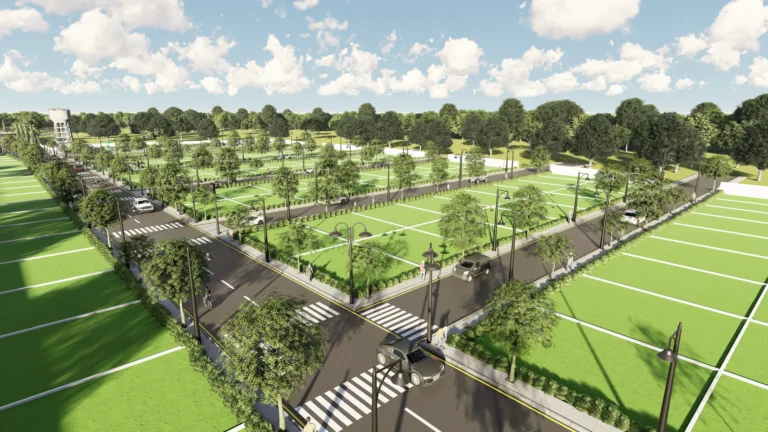

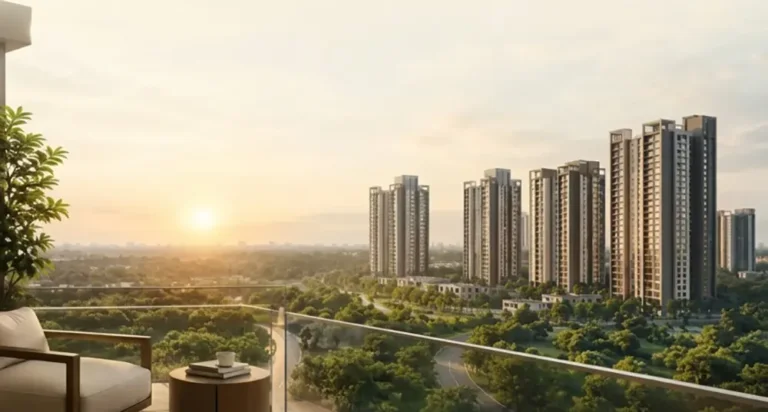

Looking at 229 projects is a lot.Tell us your budget and commute and get the best 3 to 5 on one call.
Most active builders in Bengaluru
 Prestige Group78 projects
 Godrej Properties50 projects

 Brigade Group11 projects


Questions buyers ask about Bengaluru
Is Bengaluru a good city to invest in real estate in 2026?
Yes — Bengaluru remains India's most stable end-user-driven real-estate market. Asking prices grew 13.7% from June 2025 to March 2026, with 15,778 registered transactions worth ₹14,134 Cr in that window (Karnataka govt data). Most analysts forecast 8–10% appreciation in 2026 and 25–30% cumulative by 2030, with metro-adjacent and PRR-adjacent zones leading. The market is heavily end-user driven — IT employment growth, GCC expansion, and infrastructure delivery (Purple Line operational, PRR 2027) keep demand consistent.
Which area is the best to buy in Bengaluru?
Depends on your priorities. For IT professionals, Whitefield (operational Purple Line) and Sarjapur Road (Phase 2B metro coming) are top picks. For families with school-going kids, Whitefield, Jayanagar and Indiranagar offer mature school clusters. For long-horizon investors seeking upside, North Bengaluru (Devanahalli, Hebbal, Yelahanka) is pre-PRR and pre-metro Phase 2A. For first-time buyers, Electronic City, Thanisandra and Hoskote offer 2 BHK inventory under ₹1 Cr. For premium buyers (₹3 Cr+), Koramangala, Indiranagar and Hebbal lead.
What is the average property price per sqft in Bengaluru in 2026?
Asking prices averaged ₹12,119/sqft in March 2026 (Square Yards data) — up from ₹10,653 in June 2025. Registration rates (actual transaction values) average ₹6,150/sqft per Karnataka government data. By zone: Central Bangalore ₹13,960 (+13.7%), East ₹13,297 (+9.4%), South ₹11,095 (+9.6%), North ₹10,873 (+10.2%), West ₹10,831 (+15.0%). Premium areas (Koramangala, Indiranagar, Sadashivanagar) cross ₹15,000–₹25,000/sqft.
How much does a 2 BHK flat cost in Bengaluru in 2026?
Affordable areas (Attibele, Chandapura, Begur): ₹40–60 lakh. Mid-segment IT belts (Whitefield, Sarjapur, Electronic City): ₹70 lakh–₹1.2 Cr. Premium residential (Koramangala, Indiranagar, Jayanagar): ₹1.5–3 Cr+. Average 2 BHK rent across the city is ₹34,340/month. Add 8–10% to your purchase price for registration, interiors and move-in costs.
Where should I buy property in North Bengaluru?
North Bengaluru is the city's biggest growth story. Devanahalli (₹10,500/sqft) is the airport corridor frontier with PRR completion expected 2027. Hebbal (₹10,200/sqft) is the bridge between North and Central — strong premium demand. Yelahanka offers mid-segment inventory with metro Phase 2A coming. Thanisandra (₹12,000/sqft) is mid-range and well-positioned for Manyata Tech Park employees. Hoskote is the highest-upside-with-risk play — ₹7,650/sqft with multiple infra catalysts.
How does Bengaluru compare to Hyderabad and Pune for real estate investment?
Bengaluru offers India's most consistent end-user demand (largest IT/GCC base), best 5-year appreciation track record (10–15% CAGR in IT corridors), and highest rental yields in mid-segment IT belts (3–4.5%). Hyderabad has lower entry pricing and stronger near-term momentum (Kukatpally, Gachibowli growing fast); Pune offers better affordability vs Mumbai-NCR but slower long-term appreciation. Bengaluru wins on liquidity and resale market depth; Hyderabad on entry value; Pune on price-to-quality ratio.
What's the rental yield in Bengaluru in 2026?
City-wide average rental yield is 3.37% (Square Yards). Apartments rent at ₹34/sqft monthly on average. Studios average ₹15,275/mo, 1 BHK ₹24,843, 2 BHK ₹34,340, 3 BHK ₹60,902, 4 BHK ₹1.2 lakh. Highest yields are in IT-corridor mid-segment zones (Whitefield, Sarjapur Road, Marathahalli) at 3.5–4.5%, driven by IT-professional demand. Premium areas (Koramangala, Indiranagar) yield lower (2.5–3%) but offer stronger capital appreciation.
What infrastructure is coming to Bengaluru in the next 2 years?
Three big catalysts: (1) Peripheral Ring Road (PRR) — expected 2027, will cut airport drive times by ~25 min and unlock North-East corridor land values; (2) Metro Phase 2A and 2B — Sarjapur and Hosa Road extensions expected 2027–28, will mirror the Purple Line's impact on Whitefield; (3) K-RIDE Suburban Rail — Phase 1 expected 2027, Whitefield-to-airport rail link first of its kind. Plus 140+ acres of new launches in the Whitefield-Varthur belt and Devanahalli airport corridor.
Not sure which part of Bengaluru suits you?
One call with our advisors covers areas, budgets, commute and the best live projects, with direct developer pricing.